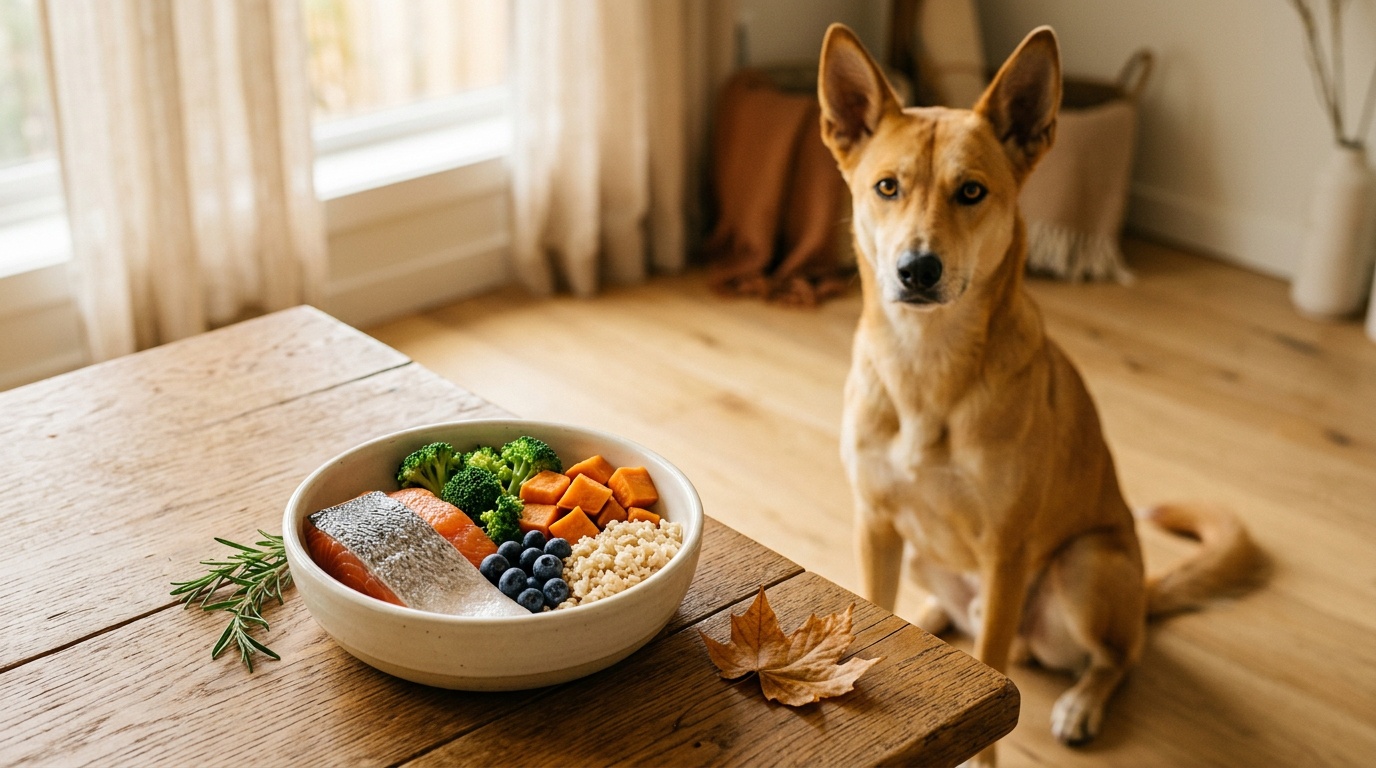
What Exactly Is a Carolina Dog?
The Carolina Dog — also known as the American Dingo, Dixie Dingo, or simply "Yaller Dog" — isn't a recent designer creation. DNA studies confirm they are direct descendants of the ancient dogs that crossed the Bering land bridge with early humans over 8,000 years ago, making them one of the oldest dog populations in the Americas.
For thousands of years, Carolina Dogs lived wild or semi-wild across the American Southeast, particularly in remote swamplands, pine forests, and riverine areas. They were never selectively bred for appearance or tasks — they survived on their own terms. That means natural selection did the hard work: weak animals didn't reproduce, and the breed developed exceptional health and efficiency.
The AKC added the Carolina Dog to its Foundation Stock Service in 1996, and today they are fully recognised by the United Kennel Club.
A 2018 study in Science confirmed that Carolina Dogs (along with Greenland sled dogs) share ancient genetic markers not found in other modern breeds — a direct genomic link to pre-colonial American dogs. Your Carolina Dog may be carrying some of the oldest dog genetics on the continent.
Physical Profile and What to Expect
Carolina Dogs are medium-sized, lean, and athletic. A healthy adult typically weighs between 15 and 23 kg (33–50 lbs), with females on the lighter end. They have a distinctive look: a wedge-shaped head, large erect ears, a deep chest, tucked waist, and a "fish-hook" tail that curves sharply upward. Coat is short and dense, usually in shades of ginger, tawny, cream, or piebald.
The breed is intelligent and loyal to its family, but often reserved with strangers — a trait that served them well as semi-wild animals. Most develop deep bonds with their people over time. They are active dogs who love to run, dig, and explore. If yours also swims and hikes, that's entirely typical — Carolina Dogs historically had territories covering miles of terrain.
Health Profile
This is where the Carolina Dog really stands out. Thousands of years of natural selection did what no breeding program ever could — it produced a dog with genuinely robust genetics. No human was selectively breeding for looks or working traits, so the genetic weaknesses that show up in most pedigree breeds simply didn't survive. The Carolina Dog that exists today is pretty much the one nature designed.
✅ Hip Dysplasia — Low Risk
Occasional mild cases reported, but far less common than in German Shepherds, Labradors, or Retrievers. Natural selection favoured sound hips.
✅ Inherited Disorders — Rare
No significant breed-specific genetic disorders identified. No epilepsy lineages, no copper disease, no common heart defects.
⚠️ Heartworm — Preventable
Common in their native Southeast USA habitat. Monthly preventive medication is essential for dogs in endemic regions.
⚠️ Anesthesia Sensitivity
Some Carolina Dogs carry sighthound-like physiology with low body fat and different drug metabolism. Always inform your vet before surgery.
Lifespans of 15–18 years are common for Carolina Dogs kept in good condition — well above the average for most medium-sized breeds. The most important thing you can do to support this is keep them lean. Excess weight is the single biggest threat to longevity in this breed.
Nutrition Fundamentals
For thousands of years, Carolina Dogs ate whatever they could find — small game, fish, birds, roots, berries, insects, and whatever the land offered that day. That history tells you a lot about how to feed them.
Lean, varied protein is the foundation. Chicken, fish, turkey, lean beef, venison — all suit the Carolina Dog well. Rotating across the week is better than picking one and sticking to it forever. Their systems evolved to handle diverse inputs, not just one thing on repeat.
Keep fat moderate. Carolina Dogs carry very little body fat naturally and their metabolisms are efficient, not high-demand. They are not sled dogs. Rich or fatty meals don't suit them. Oily fish like salmon or sardines are great for omega-3, but 2–3 times a week is plenty — not every meal.
Complex carbohydrates work well here. Sweet potato, barley, oats, brown rice — all digest well and their ancestral diet absolutely included foraged plant material. About 30–35% of the meal volume as carbs is a reasonable target.
The most important rule: don't overfeed. Carolina Dogs have efficient metabolisms built for scarcity. They will look hungry even when they're not — this is ancient behaviour, not starvation. Measure every meal and resist the urge to top up the bowl. An overweight Carolina Dog loses years off a lifespan that should comfortably reach 15–18 years.
Chicken, turkey, and lean beef don't provide meaningful omega-3 fatty acids. Always stir in 1 tsp of salmon or sardine oil per serving after cooking — heat destroys omega-3. This supports coat condition, joint health, and systemic inflammation control. Never cook the oil in.
Portion Guide
Feed 2–2.25% of your dog's healthy target body weight per day, split into two meals. Use the lower end for less active, older, or neutered dogs; the higher end for active adults doing regular hiking or swimming.
| Dog Weight | Low Activity (2%) | Regular Activity (2.25%) | Per Meal (2 meals) |
|---|---|---|---|
| 15 kg (33 lbs) | 300 g/day | 338 g/day | ~150–170 g |
| 18 kg (40 lbs) | 360 g/day | 405 g/day | ~180–200 g |
| 20 kg (44 lbs) | 400 g/day | 450 g/day | ~200–225 g |
| 23 kg (50 lbs) | 460 g/day | 520 g/day | ~230–260 g |
The body condition score matters more than the number on the scale. You should be able to feel your dog's ribs easily with light pressure but not see them. A visible waist from above and a visible abdominal tuck from the side are signs of correct condition. If ribs are hard to find, reduce portions by 10% and reassess in two weeks.
Recipe 1: The Classic Carolina Bowl
A simple, balanced everyday recipe. Lean protein, vegetables, and a complex carbohydrate — clean, efficient, and easy to batch cook for the week.
Classic Carolina Bowl
Ingredients
- Chicken thigh (skinless, boneless)140 g
- Sweet potato, cooked and mashed80 g
- Zucchini, finely chopped50 g
- Green beans, chopped40 g
- Carrot, grated30 g
- Eggshell calcium powder — add cold¼ tsp
- Salmon oil — stir in cold after cooking1 tsp
Method
- Cube the chicken. Poach or pan-cook with a little water until cooked through. No salt, no oil, no seasoning.
- Steam or boil sweet potato until soft. Mash lightly.
- Steam or lightly sauté zucchini, green beans, and carrot until softened — not mushy.
- Combine all in a bowl and allow to cool to room temperature.
- Once cool: stir in eggshell calcium powder and salmon oil. Do not add these while hot.
- Serve half now, refrigerate the second portion for the evening meal.
Carolina Dog × Herding Mix: What Changes?
Recipe 2: The Active Mix Bowl (for Carolina × Heeler and similar crosses)
Designed for a 23 kg (50 lb) active adult mix doing regular hiking and swimming. Higher complex carbohydrate content for sustained energy; protein stays lean; omega-3 essential.
Active Mix Bowl
Ingredients (one day's food — split into 2 meals)
- Lean ground beef or chicken thigh170 g
- Pearl barley, cooked90 g
- Sweet potato, cooked80 g
- Broccoli, steamed and chopped50 g
- Spinach, wilted40 g
- Carrot, grated30 g
- Egg, scrambled (no butter/oil)1 large
- Eggshell calcium powder — add cold¼ tsp
- Salmon oil — stir in cold after cooking1 tsp
Method
- Cook barley according to package — takes about 25 min. Make a large batch and refrigerate for the week.
- Brown ground beef in a dry pan with no oil or seasoning, or poach chicken thigh and shred.
- Steam broccoli and wilt spinach. Grate carrot raw — it's fine uncooked.
- Scramble the egg in a dry pan, no butter. This adds bioavailable protein and B vitamins.
- Mix everything together. Cool fully before serving.
- Once cooled: stir in eggshell calcium and salmon oil.
- Divide into two equal portions (approx. 260 g each) — one for morning, one for evening.
Foods to Avoid
Standard dog food rules apply, plus a few breed-relevant notes:
Onions, garlic, grapes, raisins, macadamia nuts, chocolate, xylitol (artificial sweetener), raw bread dough, alcohol, avocado, cooked bones.
High-fat meals: fatty pork cuts, duck skin, full-fat dairy. The Carolina Dog's efficient metabolism doesn't need high-fat food and can gain weight quickly on it.
Unlimited feeding: Carolina Dogs can look perpetually hungry — this is ancestral behaviour, not starvation. Measure every meal. Do not free-feed.
Liver and organ meat: Excellent as an occasional supplement (1–2 times per week, 10% of the meal), but not daily — excess vitamin A from daily liver causes toxicity over time.
Transitioning to Homemade Food
Don't switch cold turkey — move gradually over 10–14 days. Start with 25% new food, 75% old, then work up over the next week. The gut microbiome needs time to adjust, even in a healthy dog. Two meals a day works well for keeping energy steady and digestion smooth.
Quick Summary
Feed 2–2.25% of body weight daily, split into two meals. Rotate lean proteins across the week — chicken, fish, turkey, lean beef. Keep fat moderate. Add ¼ tsp eggshell calcium and 1 tsp salmon oil cold to every serving. For a Heeler or herding cross, increase the complex carbs (barley or oats work well). Keep your dog lean — that's the single biggest thing you can do for a long, healthy life with this breed.
Try the Recipe Generator — Carolina Dog and Australian Cattle Dog (Red/Blue Heeler) are now both in the breed dropdown. For a mixed dog, run the generator for both breeds separately and combine the guidance, or use the Active Mix Bowl recipe above as your baseline.