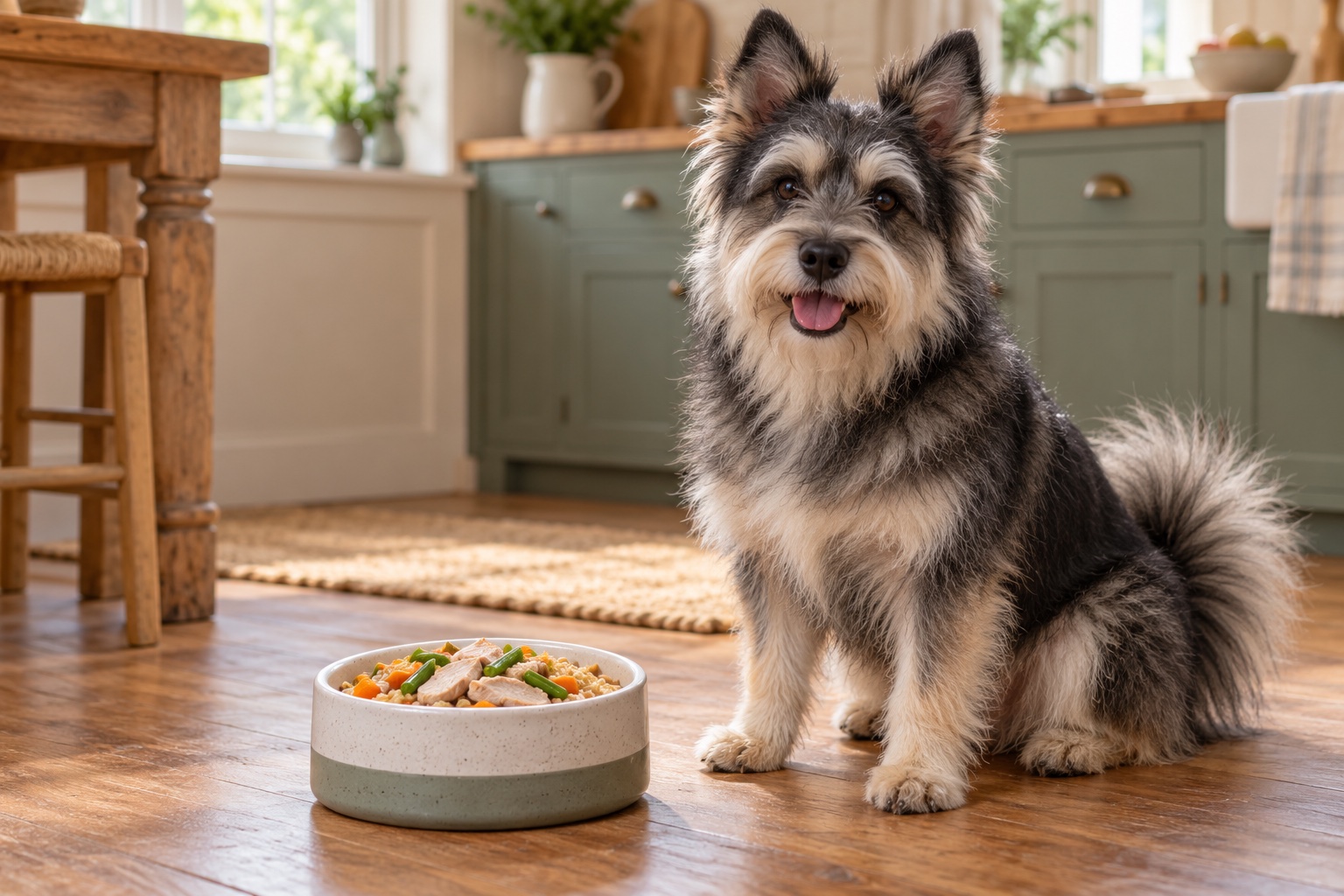
What might this mix be like?
German Spitz varieties differ considerably in size, while Miniature Schnauzers are compact dogs. The adult size, coat, appetite and activity of their offspring can therefore vary. A puppy's expected size is only an estimate. Recalculate portions during growth and use regular weigh-ins rather than feeding for an imagined “average” mix.
From the German Spitz side
- A dense double coat
- An alert, lively temperament
- Size that depends on the Spitz variety
- A need for careful weight checks beneath the coat
From the Miniature Schnauzer side
- A compact, active build
- A recognised predisposition to hyperlipidaemia
- A higher reported prevalence of pancreatitis
- A reason to be cautious with rich treats and fatty table scraps
How to feed this mix sensibly
Enter the dog's real weight
The generator calculates calories from weight and life stage. It does not use a purebred calorie multiplier.
Keep the dog lean
Check ribs and waist beneath the coat. Reduce portions gradually if body condition rises, and count treats in the daily total.
Prefer lean, simply cooked additions
Skinless chicken breast, lean turkey and appropriately prepared lower-fat foods are practical options. Avoid rich leftovers, fatty meat trimmings and large sudden fat loads.
Change food gradually
Introduce a new diet over roughly a week when the dog is well. Stop and contact a veterinarian if vomiting, marked abdominal pain, loss of appetite or lethargy develops.
Ingredient handling in the recipe generator
Foods and habits to prioritise
Useful foundations
- A complete and balanced primary diet
- Measured meals at consistent times
- Lean protein choices
- Fresh water at all times
- Dog-safe vegetables as modest additions
- Regular dental care and grooming
Use caution with
- Fatty meat, skin and drippings
- Cheese, butter and rich table scraps
- Large amounts of oil or high-fat treats
- Unbalanced meat-and-rice diets
- Supplements added without checking the full diet
- Any food that has previously caused symptoms
When veterinary advice matters promptly
Repeated vomiting, a painful or tense abdomen, refusing food, weakness or unusual lethargy can accompany pancreatitis and other urgent conditions. Do not try to manage these signs by adjusting an online recipe. Seek veterinary advice. For a healthy dog, ask about periodic weight, dental and routine blood-health monitoring appropriate to age and history.
Homemade food for this cross
Fresh ingredients can be part of the diet, but “lean” is not the same as nutritionally complete. Long-term homemade feeding needs a properly formulated source of calcium, essential fatty acids, vitamins and trace minerals. A veterinarian or board-certified veterinary nutritionist can account for test results, previous pancreatitis, allergies and the dog's exact energy needs.
Create a recipe for this exact mix
Select German Spitz first, enable mixed breed, add Miniature Schnauzer and enter the dog's actual weight.
Open Recipe GeneratorThe ancestry section uses the official German Spitz standard. The Schnauzer health caution is supported by veterinary references reporting breed overrepresentation for hyperlipidaemia and pancreatitis. It does not claim every mixed dog is affected.