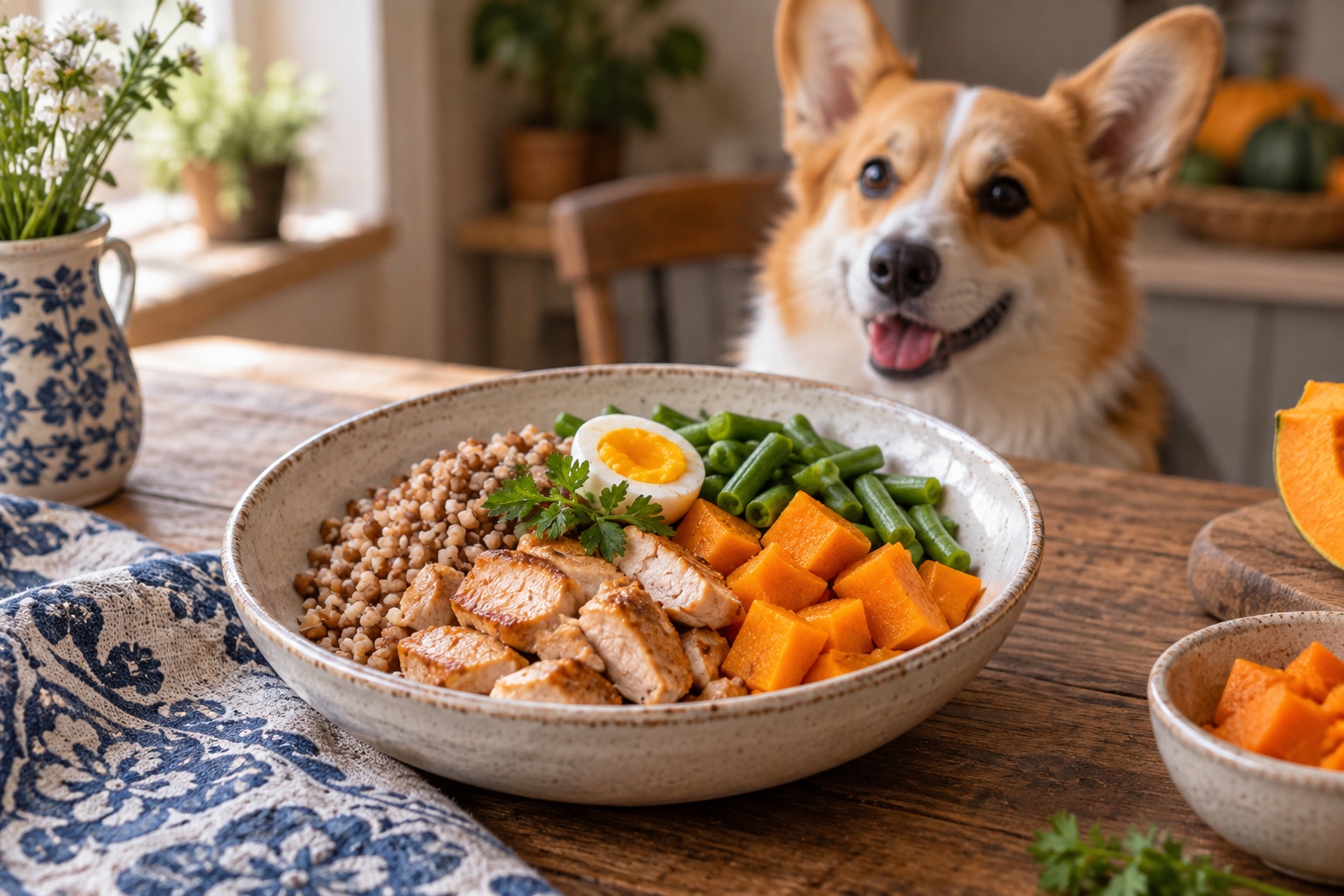
Ingredients
Use gram weights for the recipe. Cup measures are practical approximations and can vary with chopping and packing.
- 400 g · ~3 cupscooked boneless, skinless chicken thighPlain; visible fat trimmed
- 300 g · ~1¾ cupscooked buckwheat groatsCooked in water only
- 200 g · ~1 cupcooked pumpkin, mashedPlain pumpkin, not pie filling
- 150 g · ~1¼ cupscooked green beans, chopped
- 100 g · 2 largehard-boiled eggs, shelled
- 50 g · ~⅓ cupcooked chicken liver, finely diced
- 95 g · 1 small cansardines in water with bones, drainedChoose plain, no added salt
- 10 g · 2 tspextra virgin olive oil
- ~4.8 g · ~1.07 tspfinely ground eggshell calcium powderTarget: approximately 1,917 mg elemental calcium for the whole batch
Visible nutritional profile
Calculated from cooked ingredient weights using USDA FoodData Central records 172388, 170686, 168449, 169141, 173424, 171061, 172336 and the USDA entry for canned sardines in oil, drained solids. Rounded estimate before eggshell: calcium ~571 mg and phosphorus ~2,074 mg. Sardine brands and liquids vary, so the label and final formulation still need checking. Check USDA FoodData Central.
Method
Cook the buckwheat
Rinse, then simmer in plain water until tender. Drain any excess water. Do not use stock, salt or seasoning.
Cook the chicken and liver
Roast, poach or pan-cook the chicken completely. Cook the liver separately until no raw centre remains. Keep both plain and remove all bones.
Prepare the vegetables and eggs
Steam or boil the pumpkin and green beans until tender. Hard-boil and shell the eggs. Mash the pumpkin; chop everything else into pieces appropriate for your dog.
Weigh after cooking
Measure the cooked quantities listed above. This matters: 300 g of cooked buckwheat is not equivalent to 300 g dry.
Combine and cool
Mix the chicken, liver, buckwheat, vegetables and chopped egg. Stir through the olive oil. Cool promptly before portioning.
Add the sardines and eggshell powder
Once the food is cool, fold in the drained sardines and finely ground eggshell powder. Mix thoroughly so the calcium is distributed evenly through the batch.
How to make it complete and balanced
Add all three parts only after the food has cooled:
- Eggshell calcium: add enough finely ground powder to provide approximately 1,917 mg elemental calcium. This is about 4.8 g, or 1.07 teaspoons if the powder provides about 1,800 mg per teaspoon. Check the product label because density varies.
- Sardines: add one 95 g can of plain sardines in water with the soft bones included. Drain them first. They provide EPA and DHA, but the amount varies by brand.
Important: eggshell powder and sardines improve the calcium balance and omega 3 content, but they do not guarantee that every NRC or AAFCO nutrient target is met. Check with your veterinarian before feeding this as the sole long term diet.
⚠️ Kitchen safety
Keep onion, garlic, leeks, chives, grapes, raisins, chocolate, xylitol, macadamias, alcohol, cooked bones and salty stock out of the dog's batch. Georgian flavourings belong in the human kitchen, not this bowl. Introduce new ingredients gradually, refrigerate promptly, and discard food left at room temperature for an extended period.
Serving, storage and vet check
This batch contains approximately 123 kcal per 100 g before the eggshell powder is added. A dog's portion cannot be set safely from breed alone. Age, neuter status, activity, body condition and other foods all matter. Use your dog's established daily calorie target, then monitor weight and body condition.
- Refrigerate in sealed containers for up to 3 days.
- Freeze measured portions for up to 2 months.
- Thaw in the refrigerator; serve cool or gently warmed, never hot.
Check with your veterinarian before changing your dog's diet. Puppies, pregnant or nursing dogs, and dogs with pancreatitis, kidney disease, liver disease, urinary stones, allergies or another medical condition need an individually formulated diet.