🐾 Mixed Breed · Breed-Specific Nutrition
← Back to All Recipes

The Pitbull × Aussie Mix Bowl

A Turkey and sardine-based recipe built for the specific health profile of a Pit Bull and Australian Shepherd cross. The Pit Bull side drives the nutritional decisions here: low-allergen protein, omega-3 for skin health, and strict portion control for a neutered, low-activity dog. The Aussie side adds joint and antioxidant needs — both breeds share hip dysplasia risk.
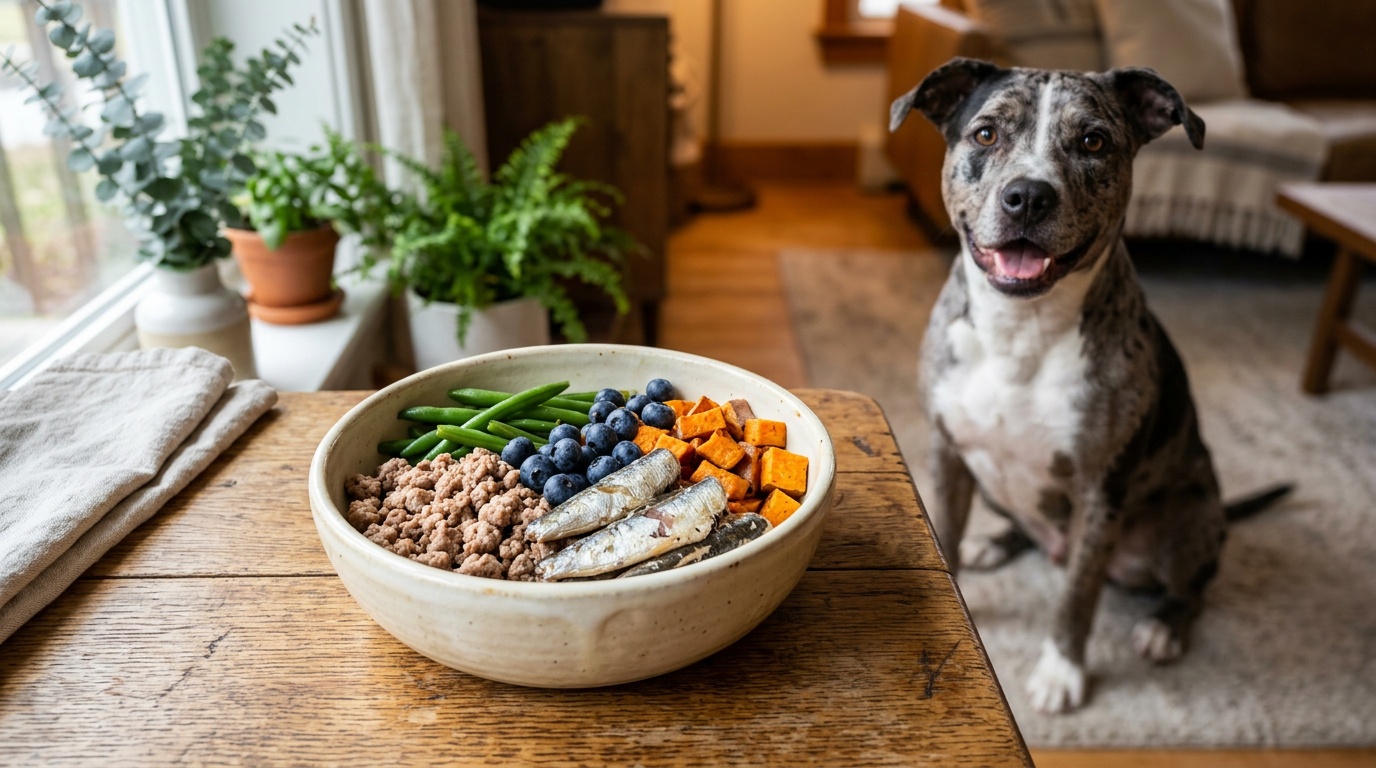
Happy mixed breed dog
~950 kcalPer Day (50 lb dog)
2 mealsDivide evenly
TurkeyLow-allergen protein
35 minTotal Time
Joint + SkinKey focus areas

Understanding Both Breeds

Parent Breed 1

🐕 American Pit Bull Terrier

Originally bred from bull-and-terrier crosses in 19th century Britain and further developed in the United States. Despite their historical reputation, Pit Bulls are deeply people-oriented, affectionate dogs — loyal to their families and, when properly socialised, gentle. They are medium-sized, muscular dogs and as a breed tend toward lower energy at rest, especially as neutered adults.

Key health profile for nutrition:

  • Skin and food allergies — the most common health issue in Pit Bulls. Chicken and beef are the most frequently implicated dietary allergens; turkey, lamb, and fish are better starting points
  • Hypothyroidism — Pit Bulls have elevated risk; adequate iodine (kelp) and supporting thyroid function matters
  • Hip dysplasia — bone broth and omega-3 for joint support from an early age
  • Weight gain — neutered and low-activity Pit Bulls gain weight easily; calorie control is critical
  • Heart disease — adequate taurine (found in poultry and sardines) supports cardiac function
Parent Breed 2

🐕 Australian Shepherd

Despite the name, Australian Shepherds were developed in the American West as herding dogs. They are highly intelligent, energetic working dogs bred for long days of sustained physical activity. When crossed with a lower-energy breed like the Pit Bull, the mix often sits somewhere between the two in terms of activity — and this dog's owner confirms he leans toward the Pit Bull's lower energy side.

Key health profile for nutrition:

  • MDR1 / ABCB1 gene mutation — affects how certain drugs are metabolised (not a food concern, but important to tell your vet about)
  • Hip dysplasia — shared risk with the Pit Bull parent; joint support is doubly relevant here
  • Eye health (PRA, CEA) — lutein from leafy greens and beta-carotene from orange vegetables support eye tissue
  • Epilepsy — Aussies carry higher epilepsy risk; antioxidants and stable blood glucose (complex carbs over simple sugars) are sensible precautions
  • Cancer risk — antioxidant-rich vegetables (broccoli, spinach, sweet potato) are protective

🧬 What this mix means nutritionally

The most important driver for this dog's diet is the Pit Bull side's allergy and skin tendency — and the owner confirms the dog's temperament leans Pit Bull too (lower energy, lazier). So the recipe prioritises: a low-allergen protein source (turkey over chicken or beef), omega-3 for skin barrier function, and careful calorie control because a neutered, lazy 50 lb dog can gain weight quickly on a generous portion.

Both breeds share hip dysplasia risk, so bone broth as the cooking medium adds glucosamine and gelatin. The Aussie side's eye and cancer risk is addressed through beta-carotene (sweet potato), lutein (spinach), and sulforaphane (broccoli). These are not expensive additions — they're already in the base vegetables.

Calorie Calculation for This Dog

📊 Why 950 kcal/day?

Dog weight50 lbs = 22.7 kg
Resting Energy Requirement (RER)70 × (22.7)^0.75 = 728 kcal
Adjustment factor (neutered + low activity)× 1.3
Daily target~946 kcal → 950 kcal/day

A factor of 1.3 rather than the standard 1.6 is used because this dog is both neutered AND described as low-activity. If he gains weight at 950 kcal, reduce to 900. If he loses weight unexpectedly, increase to 1,000. Monitor body condition — you should feel his ribs without pressing hard, but not see them. Check weight every 4–6 weeks for the first 3 months of any diet change.

What This Recipe Addresses

🦃

Low-Allergen Protein

Turkey replaces chicken and beef — the two most common Pit Bull dietary allergens. Sardines add a second protein source with natural omega-3

🐟

Skin & Coat Omega-3

Sardines plus salmon oil provide DHA and EPA — essential for Pit Bull skin barrier function and reducing atopic dermatitis flares

🦴

Joint Support

Bone broth as the cooking medium adds glucosamine and gelatin — relevant for both breeds' elevated hip dysplasia risk

⚖️

Weight Management

Portioned precisely for a neutered, low-activity adult. Turkey is lean, vegetables are high volume and low calorie

👁️

Eye & Antioxidant

Sweet potato, spinach, and broccoli provide beta-carotene, lutein, and sulforaphane — relevant for the Aussie side's eye and cancer risk

🫀

Cardiac Taurine

Turkey and sardines are good taurine sources — supports heart function in Pit Bull lines with cardiac predisposition

Full Day Recipe — 50 lb Dog (~950 kcal)

Divide into 2 equal meals. Feed morning and evening.

IngredientDaily AmountWhy This Ingredient
Proteins
Lean ground turkey (93% lean) 300g Low-allergen main protein skin-safe. Cook in bone broth — not browned
Beef liver 50g Vitamin A, B12, iron, copper — liver is the most nutrient-dense whole food for dogs
Whole egg (lightly cooked) 1 large egg Complete amino acid profile, biotin, essential fatty acids. Soft-scramble — no oil, no salt
Sardines in water, no salt (drained) 50g Omega-3 (DHA + EPA) + vitamin D + taurine skin + heart
Carbohydrates & Vegetables
Sweet potato (cooked) 120g Beta-carotene for eye health (Aussie), gentle complex carbohydrate, magnesium
Brown rice (cooked) 80g Stable glucose release — relevant for Aussie epilepsy predisposition. Easily digestible
Broccoli (lightly steamed) 80g Sulforaphane (anti-cancer), vitamin K, quercetin. Steam 3–4 min only
Spinach (wilted) 50g Lutein for eye health, iron, folate. Wilt briefly — reduces oxalates
Pumpkin seeds (raw, unsalted) 1 tbsp (9g) Zinc and manganese — often deficient in homemade diets
Cooking Liquid
Unsalted bone broth 1 cup Cook the turkey in this. Glucosamine and gelatin for joints. Adds palatability
Supplements — Add Cold After Cooling
Salmon or sardine oil 1 tsp add cold DHA + EPA omega-3. Heat destroys it completely
Eggshell calcium powder ½ tsp
(¼ tsp per meal)
add cold Corrects the Ca:P imbalance in all meat-based meals. ½ tsp/day is correct for a 22 kg dog
Kelp powder pinch (~⅛ tsp) add cold Iodine for thyroid — relevant for Pit Bull hypothyroidism tendency

📊 Approximate Nutritional Breakdown (per day)

Ground turkey 300g447 kcal · 51g protein · 25g fat
Beef liver 50g65 kcal · 9.5g protein · 1.8g fat
Egg (1 large)78 kcal · 6.3g protein · 5.3g fat
Sardines 50g65 kcal · 12.5g protein · 1.5g fat
Sweet potato 120g103 kcal · 1.9g protein · 24g carbs
Brown rice 80g90 kcal · 1.8g protein · 18g carbs
Broccoli + spinach40 kcal
Pumpkin seeds 9g54 kcal · 2.8g protein · 4.5g fat
Salmon oil 1 tsp40 kcal · 4.5g omega-3 fat
TOTAL~977 kcal · ~85g protein · ~43g fat

🐟 Omega-3 is the most important supplement for this dog

Pit Bulls have a genetic predisposition to atopic dermatitis and skin allergies. Omega-3 fatty acids (specifically DHA and EPA from marine sources) reduce the inflammatory response in skin tissue, strengthen the skin barrier, and reduce itch response. This recipe provides omega-3 from two sources: sardines (cooked in) and salmon oil (added cold). Both matter. Never skip the cold addition — heat from cooking destroys DHA and EPA almost entirely. The oil must go in after the food has cooled to room temperature.

Why These Specific Ingredients

🦃
Turkey over ChickenKey Allergy Decision

Chicken is the single most common dietary allergen in Pit Bulls — primarily the protein fraction, not the fat. Turkey is a different protein (despite both being poultry) and is well-tolerated by most Pit Bulls with chicken sensitivity. If after 8 weeks the dog shows skin, ear, or gut symptoms, consider a full novel protein elimination — lamb or white fish as the sole protein for 8–12 weeks.

🐟
Sardines in WaterOmega-3 + Vitamin D

Sardines provide DHA + EPA omega-3, vitamin D (which turkey and sweet potato don't supply), and taurine — all in one ingredient. Always use the no-salt-added version packed in water, not oil or brine. Drain well before adding. Sardines are not the same as fish oil — they're a whole food protein source that also happens to be very rich in omega-3.

🍠
Sweet PotatoEye Health + Stable Energy

Beta-carotene (converted to vitamin A) supports retinal function — relevant for the Aussie side's PRA risk. The complex carbohydrate provides slow glucose release, important for stable blood sugar in a breed with epilepsy predisposition. Better than white potato for this dog's profile.

🟤
Bone Broth (cooking liquid)Joint Support for Both Breeds

Using bone broth as the cooking liquid rather than water costs almost nothing extra but adds glucosamine, chondroitin, and gelatin — compounds that support cartilage health. With hip dysplasia risk on both sides of this mix, this is worth doing consistently. Always use unsalted — commercial broth is often very high in sodium.

🌿
Kelp PowderThyroid / Iodine

Pit Bulls have elevated hypothyroidism risk. Homemade diets are often iodine-deficient because iodised salt (which kibble uses) is excluded. A pinch of kelp powder provides natural iodine to support thyroid function. Use sparingly — too much iodine can also cause thyroid issues. ⅛ tsp once daily is the appropriate amount.

🥚
Eggshell CalciumEssential Correction

Every meat-based homemade diet has a phosphorus excess relative to calcium unless corrected. Muscle meat is high in phosphorus; without added calcium, long-term feeding causes skeletal issues. ½ tsp eggshell calcium powder per day corrects this for a 22 kg dog (split across 2 meals — ¼ tsp per meal). Add after cooling — it's stable at any temperature but easier to add with the other cold supplements.

How to Make It

1

Simmer turkey in bone broth

Add the ground turkey and one cup of unsalted bone broth to a pot. Break the mince up. Bring to a gentle simmer over low-medium heat. Cook for 20–25 minutes, stirring occasionally, until completely cooked through. The broth should mostly absorb — you want it slightly soupy, not dry.

💡 Don't brown the turkey first. Low and slow in broth keeps AGE formation low and preserves the broth's joint-support compounds.
2

Soft-scramble the egg, steam the vegetables

Soft-scramble the egg in a dry non-stick pan — no oil, no butter, no salt. Set aside. Steam broccoli for 3–4 minutes until just tender. Wilt the spinach in the residual steam or briefly in a dry pan. Sweet potato and brown rice can be batch-cooked and refrigerated — they keep well for 4 days.

3

Cool completely before assembling

Set all cooked components aside for at least 20–30 minutes until fully room temperature. You can batch-cook turkey and refrigerate — assemble from cold. This step is non-negotiable for the omega-3 to survive into the bowl.

⚠️ Fish oil added to warm food loses its omega-3 fatty acids rapidly. Always add cold.
4

Assemble and add cold supplements

Combine turkey (with broth), liver, egg, sardines, sweet potato, rice, broccoli, spinach, and pumpkin seeds in a large bowl. Mix together. Drizzle 1 tsp salmon oil over the top. Sprinkle ½ tsp eggshell calcium (or ¼ tsp per meal if dividing supplements) and a pinch of kelp powder. Mix gently. Divide into two equal portions for morning and evening meals.

📦 Batch cooking — saves time every week

This recipe is easy to batch-cook for 3–4 days. Prepare the turkey, rice, and sweet potato in bulk and refrigerate in portioned containers. Add fresh vegetables, sardines, egg, and cold supplements at each serving. Do not pre-mix and store with the fish oil already added — refrigeration slightly degrades pre-mixed oil over time. Takes about 5 minutes per serving if the base components are batch-cooked.

⚠️ Allergy monitoring — Pit Bull side

Even turkey can occasionally trigger a reaction in highly sensitive Pit Bulls, though it's far less common than chicken or beef. Monitor for these signs in the first 4–6 weeks:

If any of these appear after switching to this recipe, the most likely culprit is the beef liver — beef is a known Pit Bull allergen in some dogs. Swap for turkey liver and monitor for 3–4 weeks. If symptoms persist on turkey liver, consider a strict novel protein elimination with your vet.

🧬 MDR1 gene note (Aussie side)

Australian Shepherds carry a higher incidence of the MDR1 (ABCB1) gene mutation, which affects how certain drugs are metabolised — not food. This is not a dietary concern, but it's worth mentioning to your vet so they can avoid drugs that are dangerous for MDR1-positive dogs (ivermectin, certain chemotherapy agents, some anti-nausea medications). If your dog has never been tested, an MDR1 DNA test is available through most veterinary labs and is inexpensive.

Recipe Generator now includes Pitbull

Want to customise this recipe further — different size, different activity level, or different protein? Try the Breed-to-Bowl recipe generator. American Pit Bull Terrier is now listed.

Try the Recipe Generator →