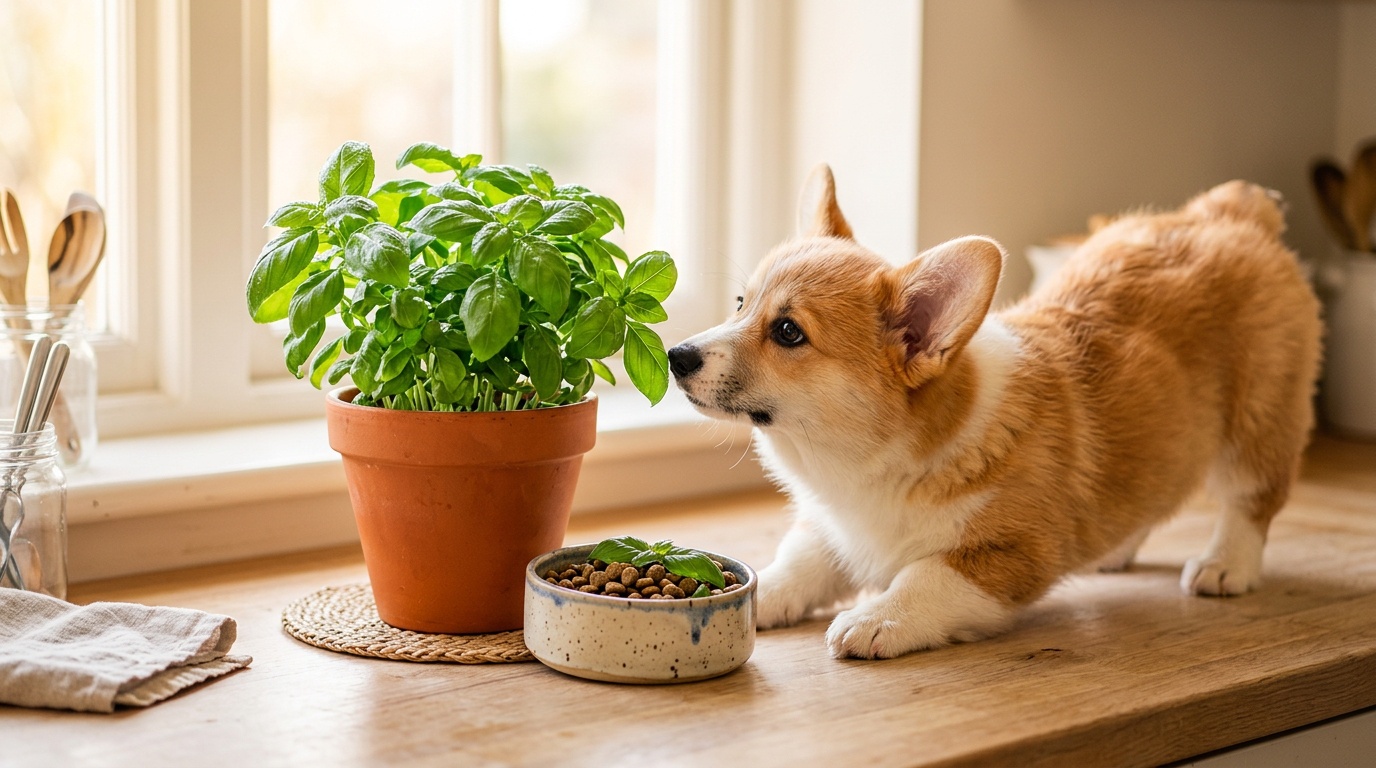
🐾 A Note Before We Begin
Our dog is named Basil. He is very handsome. He did not choose his name based on nutritional value, but looking back, it was an inspired choice. This article is about the herb — but it is dedicated to him. Basil, you are safe to eat your namesake. We checked.
Can dogs eat basil?
Yes — fresh basil is completely safe for dogs and actually quite good for them. It contains antioxidants, anti-inflammatory compounds, and vitamins A, C, and K. A small sprinkle over your dog's meal is a perfectly healthy addition. The only thing to avoid is basil essential oil, which is far too concentrated for dogs. Stick to fresh or dried leaves and you are absolutely fine.
Is Basil Safe for Dogs?
Yes, and not just in a "well it's not technically poisonous" kind of way. Basil actually has real nutritional value. It is not on any veterinary list of dangerous foods for dogs, contains no harmful compounds, and has been used in homemade dog food recipes by holistic pet nutrition advocates for years.
A few leaves over a meal or a small sprinkle of dried basil is well within safe territory. You are not going to cause any harm by adding basil to your dog's bowl. If anything, you are doing them a small favour.
Yes — Basil Is Safe and Nutritious for Dogs
Fresh or dried basil in small amounts is a safe, healthy addition to your dog's homemade meals. Even Basil the dog approves.
What Makes Basil Good for Dogs?
Basil is not just a flavour herb. It has a surprisingly solid nutritional profile for something you grow in a pot on your windowsill.
🛡️ Antioxidants
Basil contains flavonoids like orientin and vicenin that help neutralise free radicals in the body, supporting immune health and reducing cellular damage over time.
🔥 Anti-Inflammatory
Eugenol, a natural compound in basil, has documented anti-inflammatory properties. For dogs prone to joint stiffness or inflammation, herbs like basil can be a small but useful dietary addition.
🦠 Antimicrobial
Basil has natural antimicrobial properties that may help support gut health. In a homemade diet context, this makes it a worthwhile garnish rather than just decoration.
💊 Vitamins A, C & K
Vitamin A supports eye health and immunity. Vitamin C is an antioxidant (dogs produce their own, but extra from food doesn't hurt). Vitamin K plays a role in healthy blood clotting.
None of this means you should be filling your dog's bowl with basil. The amounts used as a garnish are small, and the nutritional contribution is real but modest. Think of it as a healthy finishing touch rather than a core supplement.
How Much Basil Can I Give My Dog?
A little goes a long way. Basil is a strong herb and most dogs are not exactly queuing up for a salad. A sensible amount to add to a homemade meal looks like this:
| Dog Size | Weight | Fresh Basil | Dried Basil |
|---|---|---|---|
| Small | Under 10kg | 1–2 small leaves | A tiny pinch |
| Medium | 10–25kg | 3–4 leaves | ¼ teaspoon |
| Large | 25–40kg | 5–6 leaves | ½ teaspoon |
| Giant | 40kg+ | A small handful | ½ – 1 teaspoon |
🌿 How to Serve Basil to Your Dog
Tear or chop fresh basil leaves and stir them through the finished meal — they add a gentle flavour that blends nicely into chicken or fish dishes. Dried basil can be sprinkled directly over food. You can also blend a few leaves into a bone broth topper or mix into a homemade dog food recipe. There is no need to cook it out; raw basil is perfectly fine for dogs.
What About Basil Essential Oil?
⚠️ Basil Essential Oil — Keep This Away from Dogs
This is the one exception. Basil essential oil is highly concentrated, far more potent than the fresh herb, and not safe for dogs. Essential oils should never be applied to a dog's skin or added to their food. The compounds that are perfectly fine in a few leaves become a problem in concentrated oil form. Fresh herb: absolutely fine. Essential oil: keep it away.
Will My Dog Actually Like Basil?
Honestly, it depends on the dog. Some dogs are enthusiastic about herbs and will happily eat anything you put in front of them (hi, Basil). Others will sniff it, look at you like you have personally offended them, and walk away. If your dog turns their nose up at fresh basil, try the dried version stirred into food. The flavour is milder and less perfumey once it's mixed through a meal.
The good news is there is no pressure. Basil is a nice bonus, not a dietary essential. If your dog loves it, great. If they refuse it, there are plenty of other dog-safe herbs and vegetables that offer similar benefits.
🐾 What Does Basil (the Dog) Think of Basil (the Herb)?
He is enthusiastic about most foods, deeply suspicious of anything green, and has never once read a nutritional label in his life. We sneak a little into his chicken bowl sometimes. He has not complained. We consider this an endorsement.
Other Dog-Safe Herbs Worth Knowing About
Basil is not the only kitchen herb that is safe and beneficial for dogs. If you enjoy cooking with herbs, these are all worth adding to your dog's meals occasionally:
- Parsley is great for fresh breath and contains vitamin C. Use flat-leaf parsley only. Spring parsley is toxic to dogs, so check the label.
- Oregano has antifungal and antimicrobial properties. Keep amounts small though, as large quantities can upset the stomach.
- Turmeric is a powerful anti-inflammatory. Pair it with a pinch of black pepper and a fat source to help absorption.
- Ginger is excellent for nausea and digestion, and also has anti-inflammatory benefits.
- Rosemary is antioxidant-rich and safe in small amounts, but skip it for dogs prone to seizures.
⚠️ Herbs That Are NOT Safe for Dogs
Not all herbs are created equal. Garlic and onion (and the entire allium family) are toxic to dogs even in small amounts. Chives fall into the same category. Nutmeg is toxic. Tea tree is toxic. When in doubt with any new herb, check before adding it to your dog's food.
The Bottom Line
Basil is safe for dogs, genuinely nutritious in small amounts, and a lovely way to add variety and a touch of herbal goodness to homemade meals. Tear a few leaves over the bowl, sprinkle some dried basil through a recipe, and feel good about it.
And if your dog happens to be named Basil, well. You now have a party trick. He can eat himself. Nutritionally speaking, he is a solid choice.