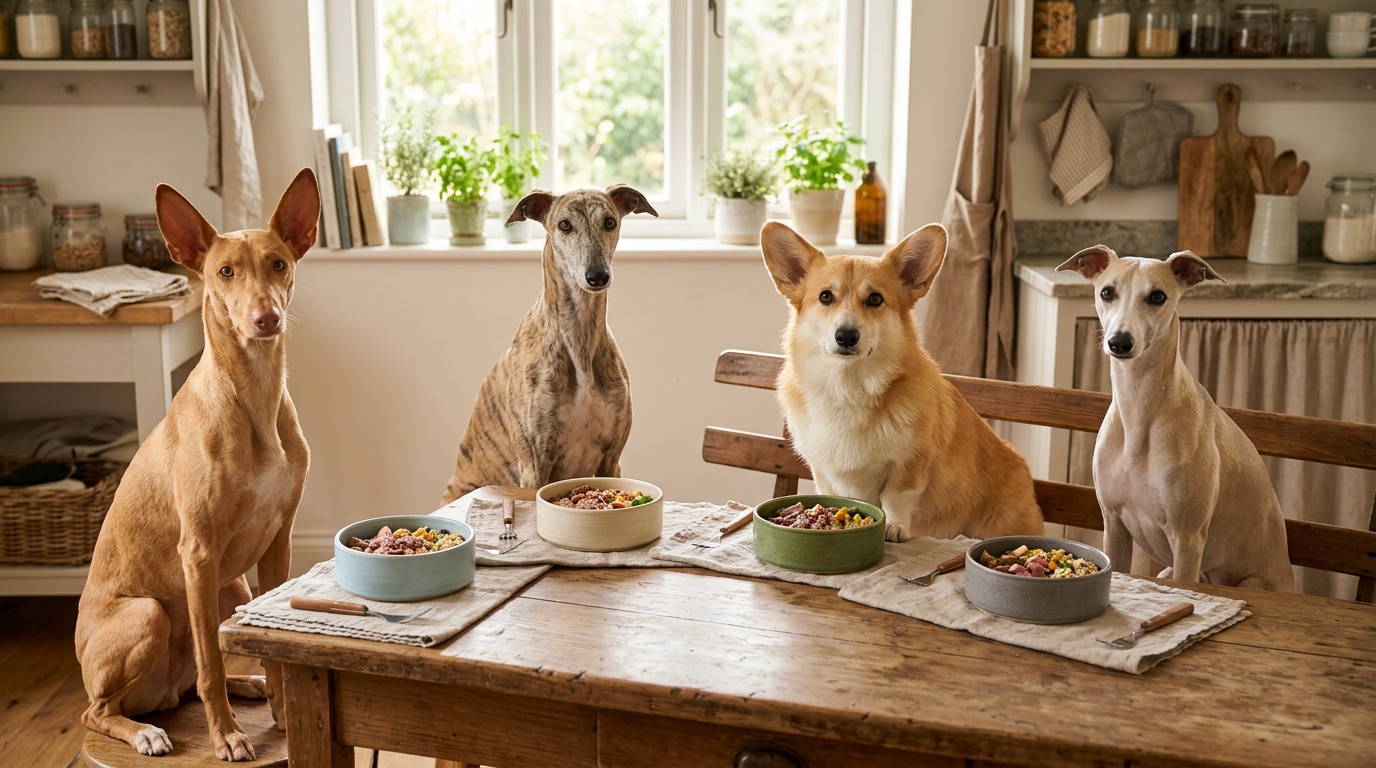
Ask ten dog owners how often they feed their dog and you will get ten different answers. Once a day. Twice a day. Free feeding. Whenever they ask. The honest truth is that feeding frequency is not just a preference — it has real consequences for your dog's digestion, blood sugar, gut health, and for deep-chested breeds, it can even be the difference between life and death.
The broad veterinary consensus is clear: most adult dogs should eat twice a day. But beyond that consensus, the specifics vary significantly depending on your dog's breed, size, age, and health status. Here is the complete picture.
Why Feeding Frequency Matters More Than You Think
Dogs evolved from wolves, and some owners cite this as justification for once-a-day or even every-other-day feeding, since wolves do not eat on a fixed schedule. But domestic dogs have spent 15,000+ years co-evolving with humans. Their digestive biology, insulin response, and gut microbiome have changed significantly — and so have their needs.
Here is what happens physiologically when a dog goes too long between meals:
- Blood sugar drops: Unlike humans, dogs process glucose quickly. Small breeds and puppies are especially vulnerable to hypoglycaemia (low blood sugar), which causes lethargy, weakness, and in severe cases, seizures.
- Bile accumulates: When the stomach is empty for extended periods, bile and gastric acid pool in the lower stomach. This causes nausea and the characteristic yellow bile vomiting that many once-a-day-fed dogs experience in the early morning — a condition called bilious vomiting syndrome.
- Stomach bloat risk increases: A very empty stomach is more likely to flip or fill with gas rapidly when a large meal is consumed. For deep-chested breeds, this is the primary driver of GDV (gastric dilatation-volvulus) — a life-threatening emergency.
- Muscle catabolism: Long fasting periods prompt the body to begin breaking down muscle protein for energy, which is particularly damaging for active and working breeds.
The Age Guide: How Feeding Frequency Changes Over a Dog's Life
💡 The 12-Hour Rule
For most adult dogs, aim to keep the gap between meals at no more than 12 hours. If you feed at 7am and 7pm, you have an overnight fast of roughly 12 hours — this is appropriate. If you feed at 7am and then skip dinner, your dog is fasting for 24 hours. That is too long for the majority of dogs.
The Breed-Specific Breakdown
This is where it gets nuanced. Feeding frequency is not one-size-fits-all — your dog's body type and genetic history plays a major role.
| Breed Category | Examples | Recommended | Why |
|---|---|---|---|
| Large & Giant Breeds | Great Dane, German Shepherd, Labrador, Golden Retriever, Saint Bernard, Rottweiler | 2× MINIMUM | GDV (bloat) risk from one large meal. Never feed before or after vigorous exercise. |
| Deep-Chested Breeds | Weimaraner, Standard Poodle, Dobermann, Irish Setter, Boxer, Bloodhound | 2× STRICTLY | Anatomy makes gastric torsion more likely. These breeds have among the highest GDV mortality rates. |
| Small & Toy Breeds | Chihuahua, Yorkie, Maltese, Pomeranian, Toy Poodle | 2–3× daily | Tiny bodies burn glucose quickly. Long fasting gaps cause blood sugar drops and hypoglycaemia. |
| Brachycephalic Breeds | English Bulldog, French Bulldog, Pug, Shih Tzu, Boston Terrier | 2–3× smaller | Air gulping while eating is common. Smaller, more frequent meals reduce gas accumulation and regurgitation. |
| Working & Athletic Breeds | Border Collie, Siberian Husky, Malinois, Border Terrier, Vizsla | 2× + snack on work days | High energy expenditure. On heavy exercise days, a small third meal helps with muscle recovery and sustained energy. |
| Medium Breeds (average build) | Cocker Spaniel, Beagle, Whippet, Australian Shepherd | 2× daily | Standard twice-daily feeding works well. Consistent timing supports gut microbiome stability. |
The Dangerous Truth About Once-a-Day Feeding for Large Breeds
⚠️ GDV (Bloat) Is a Medical Emergency
Gastric Dilatation-Volvulus (GDV), commonly called bloat, is when a dog's stomach fills with gas and then twists on itself, cutting off blood supply to the stomach and spleen. It kills within hours without emergency surgery — and it disproportionately strikes large, deep-chested dogs fed one large meal a day. A 2021 study in Veterinary Medicine and Science found that once-a-day feeding in large breeds was a significant independent risk factor for GDV. Feeding twice daily reduces this risk meaningfully.
Great Danes have a lifetime GDV risk estimated at 42%. German Shepherds, Standard Poodles, and Weimaraners are also in the highest-risk category. For these breeds, twice-daily feeding is not just a preference — it is a medically grounded safety practice.
Additional GDV risk factors you should know:
- Vigorous exercise within 1 hour before or 2 hours after eating
- Eating too fast (use a slow-feeder bowl)
- Elevated food bowls — contrary to old advice, raised bowls may increase GDV risk in some studies
- Stress during or after eating
- Drinking large amounts of water immediately after a meal
Small Breeds: The Blood Sugar Problem
At the opposite end of the size spectrum, toy breeds face a different but equally real problem. A Chihuahua or Yorkshire Terrier has such a small body mass that blood glucose can fall dangerously low after just 8–10 hours without food. Signs of hypoglycaemia in small dogs include:
- Lethargy or sudden weakness
- Wobbling or loss of coordination (looks like drunkenness)
- Muscle tremors or twitching
- Glassy eyes or unusual staring
- In severe cases: collapse or seizures
For toy breeds under 5kg, three meals a day until at least 12 months old is often the safer approach. Two meals per day is appropriate for most small adults, but spacing should be as even as possible — 8 to 12 hours apart, not 6 and 18.
The Yellow Bile Vomiting Problem
If your dog regularly vomits yellow or white foam first thing in the morning, this is almost certainly bilious vomiting syndrome — and it is one of the clearest signs that the overnight fast is too long. Bile (produced by the liver to help digest fats) accumulates in an empty stomach and irritates the lining, causing nausea and regurgitation.
The solution is usually one of two things:
- Split once-a-day feeding into two equal meals (morning and evening)
- If already feeding twice daily, offer a small bedtime snack — a spoonful of plain cooked rice with a little protein works well
If yellow bile vomiting continues after dietary changes, have your vet investigate — it can occasionally signal reflux, a slow-emptying stomach (delayed gastric emptying), or inflammatory bowel disease.
How to Transition from 1 Meal to 2 Meals a Day
If you are currently feeding once a day and want to switch to twice daily, do it gradually over 7 to 10 days to give your dog's digestive system time to adjust.
Calculate Your Dog's Daily Portion
Use your current daily food amount as the starting point. This total does NOT change — you are simply dividing it differently. Use our Calorie Calculator to confirm the right daily total for your dog's weight and activity level.
Start With a 70/30 Split — Not 50/50
In the first few days, give 70% of the daily ration at the usual meal time and introduce a smaller 30% meal at the new time (morning or evening, whichever is new). This prevents your dog from refusing the unfamiliar second meal time.
Move to 60/40 After 3 Days
By day 3 to 4, your dog should be eating the new smaller meal readily. Shift to a 60/40 split — slightly more at the primary meal, a meaningful second meal.
Reach 50/50 by Day 7–10
By the end of the transition period, you should be at an even 50/50 split with consistent timing — ideally within 30 minutes of the same time each day. Dogs thrive on routine, and consistent meal timing also helps with house training and digestion.
⚠️ One Important Exception: Dogs With IBD or Pancreatitis
Dogs with inflammatory bowel disease, chronic pancreatitis, or certain other GI conditions sometimes do better with 3 or even 4 small meals per day. If your dog has been diagnosed with any chronic digestive condition, always follow your vet's specific feeding frequency recommendation — general guidelines may not apply.
Does It Matter What Time You Feed?
Yes — more than most people realise. Dogs have circadian rhythms just like humans, and their digestive enzyme production and gut motility are partially regulated by consistent meal timing. Research on dogs' gut microbiome shows that irregular feeding times (wildly different times each day) reduce the stability of beneficial gut bacteria populations.
This does not mean you need military precision. But feeding within a 30-minute window of the same time each day — say, 7am ± 30 minutes and 6pm ± 30 minutes — is genuinely better for digestion than random timing.
One additional note: never feed a large meal within 2 hours before or 1 hour after vigorous exercise. For large and deep-chested breeds especially, exercise-associated GDV is a documented risk. Wait until your dog has cooled down and recovered before offering their meal.
Build the Right Meal Plan for Your Dog's Breed
Our free tools calculate the exact daily calorie target and portion size for your dog — based on weight, breed, age, and activity level. No guesswork.
Calorie Calculator → Meal Plan Tool →Frequently Asked Questions
Is once a day feeding OK for dogs?
For most adult dogs, twice-a-day feeding is strongly preferred by vets. Once-a-day feeding increases the risk of bilious vomiting syndrome (yellow bile vomiting), blood sugar instability in small breeds, and GDV (bloat) in large and deep-chested breeds. There are very few situations where once-a-day feeding is the best choice for a healthy adult dog.
When should I switch from 3 meals to 2 meals a day?
For most breeds, between 4 and 6 months of age. Large breeds can often make the switch at 4 months, while small and toy breeds benefit from staying on 3 meals until 5–6 months. Transition gradually over 7–10 days rather than switching abruptly. Always keep the total daily calorie amount the same — you are just splitting it differently.
Which breeds should never eat just one meal a day?
Deep-chested and large breeds face the highest GDV risk from once-a-day feeding: Great Danes, German Shepherds, Standard Poodles, Weimaraners, Dobermanns, Irish Setters, Boxers, Golden Retrievers, Labradors, and Saint Bernards. For these breeds, two meals per day is a genuine safety recommendation, not just a preference.
Why does my dog vomit yellow bile in the morning?
This is usually bilious vomiting syndrome, caused by an overly long overnight fast. Stomach acid and bile accumulate when the stomach is empty for 14+ hours, causing nausea and yellow vomit before the first meal. The fix is simple: split into two meals, or offer a small late-evening snack. If it continues after dietary changes, have your vet rule out reflux or delayed gastric emptying.