🇰🇷 Korea 🐕 Jindo Pick 🌍 World Kitchen 🆓 Free

Korean Beef Bibimbap
for Dogs

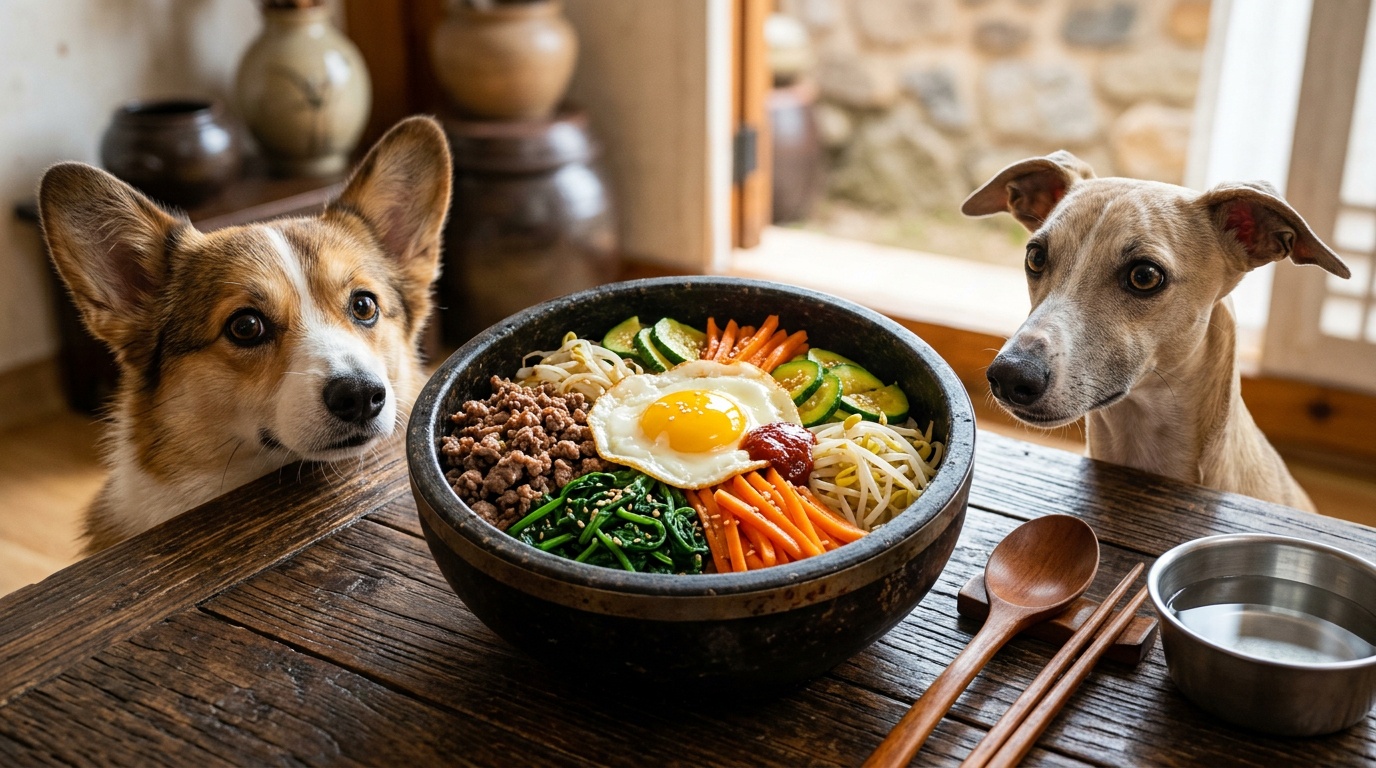
비빔밥 — Korea's legendary "mixed rice" bowl. Lean beef mince with spinach, carrots, zucchini and bean sprouts over short-grain rice, finished with a soft egg. No gochujang, no soy sauce, no garlic — pure Korean warmth, made completely safe for your dog.
⏱️ 40 min total
🍽️ 4 servings
🔥 310 kcal / serve
💪 28g protein
Korean Beef Bibimbap for Dogs — colourful mixed rice bowl
📊 Nutrition Per serving
310
Calories (kcal)
28g
Protein
10g
Fat
30g
Carbs
4.5g
Fibre
🇰🇷

About Bibimbap (비빔밥)

Bibimbap literally means "mixed rice" — a bowl of warm short-grain rice topped with individually prepared seasoned vegetables (namul), beef and a fried egg, all mixed together at the table. It has been eaten in Korea for over 600 years, with the earliest written records dating to the Joseon Dynasty. The dish's beauty is in its colours — historically, chefs arranged five colours representing the five elements of Korean traditional philosophy. The gochujang chilli paste, soy sauce, garlic and doenjang that give the human version its bold heat are replaced here with unsalted beef broth and a touch of sesame oil — the soul of bibimbap without anything harmful to dogs.

🏆 Why This Recipe Is Good For Your Dog

🥩
Lean Beef Muscle Protein
90% lean beef provides all essential amino acids including lysine, methionine and taurine — particularly important for large and medium-breed dogs that need taurine for heart health.
🌱
Five Vegetables, Five Benefits
Spinach (iron + folate), carrots (beta-carotene), zucchini (potassium + fibre), bean sprouts (vitamin C + K) — the traditional five-colour philosophy delivers genuine nutritional diversity.
🥚
Egg Yolk Choline
One of nature's richest sources of choline — essential for brain function, liver health and fat metabolism in dogs of all ages. The soft-cooked white is also a complete protein complement to beef.
🍚
Digestible Short-Grain Rice
Korean short-grain rice is among the most gut-friendly carbohydrates for dogs — smooth, starchy and easy on sensitive digestive tracts. Ideal for active dogs needing sustained energy.
🦴
Calcium-Phosphorus Balance
Beef is high in phosphorus. Eggshell calcium powder corrects the ratio, protecting bone density and joint health — especially critical for active, athletic breeds like the Korean Jindo.
🐟
+ Salmon Oil for Omega-3
Sesame oil provides omega-6 only. Salmon oil added cold after cooking delivers DHA and EPA — essential omega-3 fatty acids for coat shine, brain health and reducing inflammation.

🛒 Ingredients

Makes 4 servings. Use the calorie calculator to find the right portion size for your dog's weight.

  • 350gLean beef mince, 90% lean or higher — drain excess fat after browning
  • 1 cupKorean short-grain rice (uncooked) — or Japanese sushi rice
  • 2 largeEggs — cooked sunny-side-up or softly scrambled
  • 100gBaby spinach, fresh
  • 1 mediumCarrot, julienned or finely grated
  • 1 mediumZucchini, julienned or finely diced
  • 100gMung bean sprouts, rinsed — briefly cooked, not raw
  • 1 tspSesame oil — for cooking only (omega-6; see omega-3 note below)
  • 3 cupsUnsalted beef broth — 2 cups for rice, 1 cup for vegetables
  • ¼ tspEggshell calcium powder per serving — stir in cold after cooking
  • ½–1 tspSalmon or sardine oil per servingstir in cold after the bowl has cooled. Sesame oil is omega-6 only; salmon oil provides the DHA & EPA omega-3 essential for coat, brain and joints.

👨‍🍳 How to Make It

1

Cook the rice

Rinse the short-grain rice under cold running water, swirling until the water runs completely clear — this removes surface starch and prevents a gluey texture. Pour into a pot with 2 cups of unsalted beef broth. Bring to a gentle boil, reduce heat to the lowest setting, cover tightly and cook for 18–20 minutes. Do not lift the lid. Remove from heat and let it steam for a further 5 minutes — this is the Korean method for perfectly fluffy rice every time.

2

Brown the beef

Heat the sesame oil in a wide, heavy pan over medium-high heat. Add the lean beef mince and break it apart immediately with a spatula. Cook for 6–8 minutes, stirring and breaking up any clumps, until every piece is completely browned with no pink remaining. Tilt the pan and spoon out any excess fat — lean beef is healthier for dogs and lower excess fat prevents digestive upset.

3

Cook the vegetables

In the same pan, add the julienned carrot and diced zucchini. Pour in the remaining 1 cup of unsalted beef broth and simmer over medium heat for 3–4 minutes, stirring occasionally, until the vegetables are just tender and most of the broth has been absorbed. Add the rinsed bean sprouts and stir for 1 minute — they should soften slightly but keep a little bite. Cooking the sprouts is essential; raw sprouts can carry harmful bacteria.

4

Wilt the spinach

Add the baby spinach to the pan and fold it through the beef and vegetable mixture. Cook for about 60 seconds over medium heat until the spinach has just wilted — it will shrink to roughly one-third of its raw volume, which is completely normal. Remove from heat immediately. Do not overcook; brief wilting preserves the maximum iron, folate and vitamin K.

5

Cook the eggs

In a separate small non-stick pan over low heat, fry each egg sunny-side-up — the white should be fully set and opaque, while the yolk can remain soft. Alternatively, softly scramble the eggs until just set and silky. A fully runny egg white is not safe for dogs, but a soft yolk is fine once the white is cooked through. One egg per portion is the target.

6

Assemble the bowl and finish cold

Spoon the warm rice into your dog's bowl, forming a base. Ladle the beef, vegetable and spinach mix generously over the top. Place the cooked egg on top — in authentic bibimbap, the egg sits proud in the centre. Allow the entire bowl to cool fully to body temperature (test on your wrist — it should feel neutral, not warm). Once cool, stir in the eggshell calcium powder and salmon oil per serving. These must always be added cold — cooking destroys omega-3 fatty acids and reduces calcium bioavailability.

🚫 What Traditional Bibimbap Has That Dogs Cannot Eat

Classic human bibimbap relies on ingredients that are entirely unsafe for dogs — all have been removed:

  • Gochujang (고추장) — fermented red chilli paste; capsaicin causes gastric irritation and mouth pain in dogs. Even small amounts can cause vomiting.
  • Soy sauce (간장) — extremely high sodium content. Even a teaspoon can cause salt toxicity symptoms in small and medium dogs.
  • Garlic (마늘) — Allium family; directly toxic to dogs. Damages red blood cells and causes haemolytic anaemia. No safe dose for dogs.
  • Doenjang / gochugaru — fermented soybean paste and chilli flakes; high sodium and gut irritant for dogs.
  • Sugar / honey — sometimes added to bibimbap sauce; unnecessary for dogs and contributes to dental decay.
  • Spring onions / green onion — Allium family; toxic to dogs, same risk as garlic.
🐕

Why Korean Jindos Love This Recipe

The Korean Jindo (진도개) is South Korea's National Natural Treasure No. 53 — a lean, athletic, fiercely loyal spitz-type hunting breed native to Jindo Island. What's on the island, ancestrally? Fresh seafood, rice, local vegetables. This recipe mirrors that heritage while addressing the Jindo's specific modern nutritional needs:

  • Lean, high-activity metabolism: Jindos are naturally muscular with a low body fat percentage. Lean 90% beef keeps protein high without overloading a lean frame with excess fat. The moderate carbohydrate from short-grain rice fuels their characteristically explosive sprint energy.
  • Taurine support: Grain-inclusive diets with rice help prevent the dilated cardiomyopathy (DCM) concerns that have been linked to grain-free diets in some breeds. Lean beef also provides natural taurine precursors.
  • Dense double coat: Jindos have a beautifully thick plush coat that requires omega-3 DHA and EPA to maintain its lustre and reduce seasonal blow-coat shedding. Salmon oil added cold after cooking provides exactly this.
  • Joint longevity: Active breeds put significant load on joints. The calcium-phosphorus balance from eggshell powder protects bone density over a lifetime of movement.
  • Sensitive digestion: Jindos can be particular eaters with sensitive stomachs. Short-grain rice and the simple, whole-food ingredient list here make it easy to identify and avoid any dietary triggers.

📊 Nutrition Per Serving

310
kcal
28g
Protein
10g
Fat
30g
Carbs

Before salmon oil. Use the calorie calculator to adjust the portion size for your dog's weight and activity level.

🐟 Don't Forget Omega-3

Sesame oil provides omega-6 — not omega-3. Only fish oil (salmon, sardine) provides DHA and EPA, which dogs cannot synthesise themselves and must get from food.

Stir in ½–1 tsp salmon or sardine oil per serving after the bowl has fully cooled. Never cook or reheat the oil.

✅ What This Recipe Covers

  • ✅ Complete protein (lean beef + egg)
  • ✅ Taurine (lean beef)
  • ✅ Choline (egg yolk)
  • ✅ Iron & folate (spinach)
  • ✅ Beta-carotene (carrot)
  • ✅ Potassium & fibre (zucchini)
  • ✅ Vitamin C & K (bean sprouts)
  • ✅ Digestible carbohydrate (rice)
  • ✅ Calcium balance (eggshell powder)
  • ✅ Omega-3 DHA/EPA (salmon oil — add cold)

💡 Batch Cooking Tip

Make a full batch and refrigerate for up to 3 days, or freeze individual portions for up to 2 months. Store the cooked egg separately — eggs turn rubbery after freezing. Thaw overnight in the fridge, reheat gently, cook a fresh egg, and assemble. Always add salmon oil and eggshell calcium freshly after cooling — never cook them into the reheated dish.

📖 Related Reading

Wondering how often to serve this — once a day or twice? We've covered the science.

1 Meal or 2 Meals a Day? The Breed-Specific Guide →

🔬 Making This Recipe NRC-Complete

Whole food recipes are a strong foundation — but three steps are non-negotiable for long-term nutritional completeness, per NRC (National Research Council) 2006 guidelines, the gold standard for homemade dog food.

🦴

Step 1 — Eggshell Calcium (every meal)

Meat is very high in phosphorus and very low in calcium. Without correction the body pulls calcium from bones. Add ¼ tsp ground eggshell powder per serving, stirred in cold after cooking (≈900 mg calcium per ½ tsp). This corrects the Ca:P ratio to the NRC target of ~1.2:1.

🐟

Step 2 — Salmon Oil Cold (every meal)

Unless this recipe already includes fatty fish (salmon, sardines, mackerel), stir in ½–1 tsp salmon or sardine oil per serving after cooling. Never heat the oil — it destroys DHA and EPA. Dogs cannot convert plant omega-3 (ALA) to usable EPA/DHA at meaningful rates.

🫀

Step 3 — Liver 2–3× per Week

Beef liver covers copper, zinc, selenium, vitamin D and B12 — the micronutrients most commonly missing from home-cooked meals. Use 30–40g per 10 kg body weight, 2–3× per week. Do not exceed 10% of total food intake — vitamin A toxicity is a real risk with too much liver.

💊

Step 4 — Balance IT (optional safety net)

For complete peace of mind, add a calibrated dose of Balance IT Canine once per batch. Developed by UC Davis veterinary nutritionists, it fills remaining gaps for manganese, selenium, magnesium, iodine and vitamins not easily provided by whole foods alone. Follow the label dose for your dog's weight exactly.