🐾 The Whole Trick Is Doing It in the Right Order
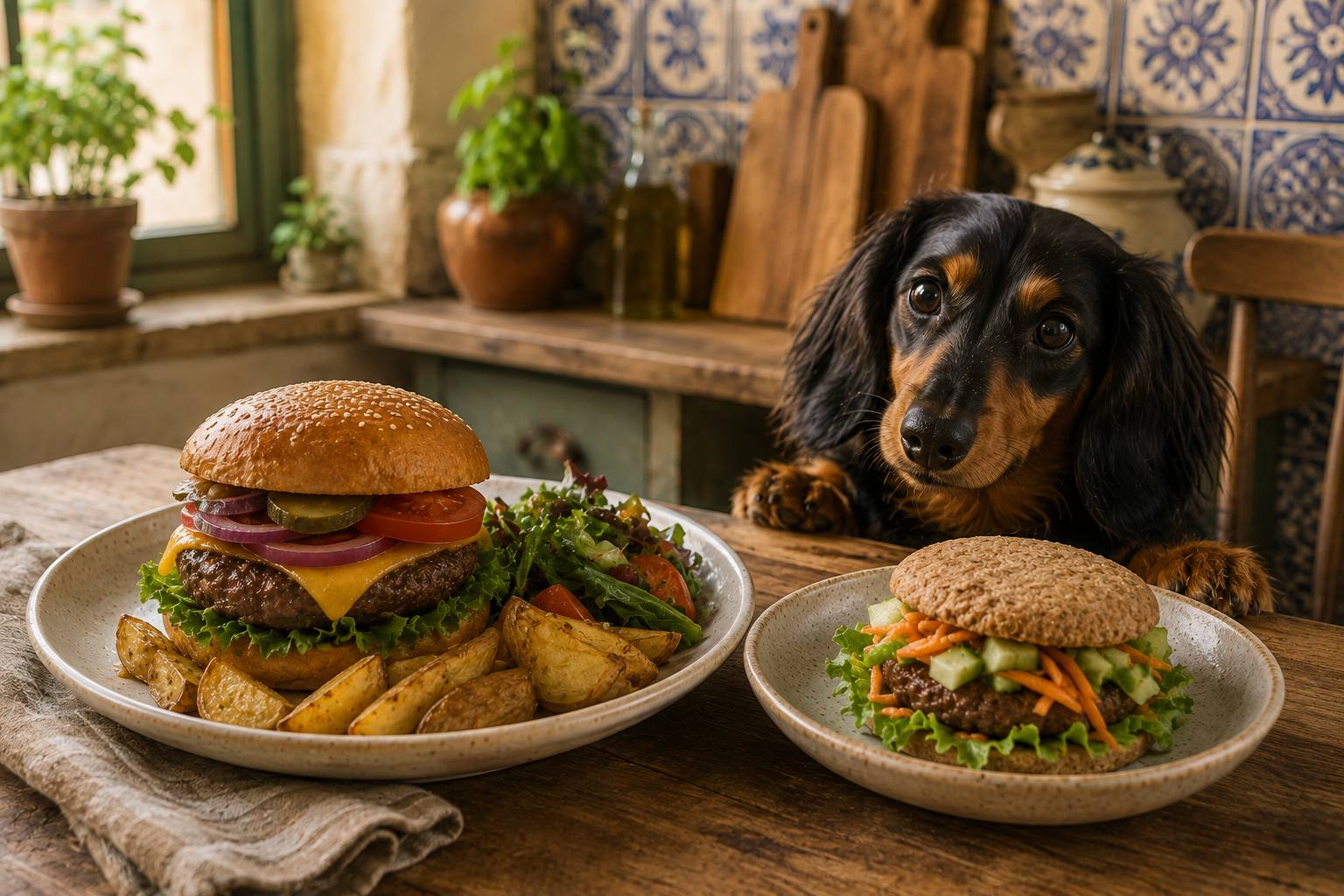
Most of what makes a burger dangerous for a dog gets added after the mince comes out of the packet. Salt. Onion powder. Garlic. Cheese. Sauce. So the entire dog recipe is really just one instruction: take their share out of the bowl first, before you season anything. Everything after that is a normal burger night. Same pan, same twenty minutes, same table. You are not cooking twice.
🥩Complete Protein
Lean beef delivers every essential amino acid, plus heme iron that plant sources cannot match
🍠Beta-Carotene
Sweet potato brings vitamin A precursors for vision, skin and immune function
🥚Choline & Binder
Egg holds the patty together and supplies choline for liver and brain function
🌾Beta-Glucan Fibre
Rolled oats replace salted breadcrumbs and add soluble fibre that steadies digestion
🦴Calcium Balanced
Eggshell powder corrects the calcium to phosphorus ratio that meat-heavy meals distort
🐟Omega-3 Added Cold
Beef is rich in omega-6 and poor in omega-3, so fish oil closes a real gap here
This one is straightforward for most healthy adult dogs, but beef is a richer protein than chicken and the fat content matters more than usual. Check below before you shape the patties.
✅ Suitable for most breeds
Most healthy adult dogs. Labradors, German Shepherds, Border Collies, Golden Retrievers, Huskies, Rottweilers, Beagles, Staffies, Poodles, Dachshunds, Jack Russells and most mixed breeds handle this exactly as written.
Active and working dogs. The protein and fat density suits dogs burning real energy, and beef is more calorie-dense than chicken.
Fussy eaters. Very few dogs turn down a beef patty. Useful for reintroducing home-cooked food to a dog that has been refusing it.
⚠️ One small adjustment
- Pancreatitis-prone breeds, or dogs carrying weight. Use 5 percent fat mince only, skip the pan oil by using non-stick, then halve the patty and double the green beans. The bowl stays full and the calories drop.
- Deep-chested giants such as Great Danes and Wolfhounds. Split into two smaller meals and rest your dog 45 minutes either side of eating.
- Dogs prone to calcium oxalate stones. Sweet potato is moderate in oxalate. Swap it for plain white potato or white rice.
❌ Not recommended
Dogs with a confirmed beef allergy. Beef sits alongside dairy and chicken as one of the three most common food allergens in dogs. Signs include chronic itching, recurrent ear infections and paw licking. Turkey mince works identically here.
Puppies under 6 months. Growing dogs need tightly controlled calcium, phosphorus and calorie ratios that this recipe is not designed to hit.
Dogs on a prescribed low-protein or low-fat diet. Talk to your vet first.
Based on roughly 2 to 2.5 percent of body weight per day. Adjust for activity level and current body condition. If you feed twice a day, halve these amounts per meal. Weights shown are cooked weights.
🥩Lean Beef MinceComplete Protein • Heme Iron • Zinc • B12
Beef gives you every essential amino acid in one ingredient, along with heme iron in the form dogs absorb most efficiently. It is also one of the best natural sources of zinc, which matters for skin barrier function and wound healing, and vitamin B12 for nerve health. Choose 5 to 10 percent fat. Anything fattier turns a good meal into a rich one.
⚠️ Cook until no pink remains. Never serve raw mince from a supermarket tray.
🥚Whole EggCholine • Binder • Biotin • Selenium
The egg does two jobs. Practically, it binds the patty so it does not fall apart in the pan without needing salted breadcrumbs. Nutritionally, the yolk is one of the richest natural sources of choline, which supports liver function and cognitive health. Always cooked, never raw, because raw white contains avidin which binds biotin.
🌾Rolled OatsBeta-Glucan • Soluble Fibre • Manganese
Standard burger recipes use breadcrumbs, which in a shop-bought packet are usually loaded with salt. Plain rolled oats do the same binding job and bring beta-glucan, a soluble fibre that slows gastric emptying and feeds beneficial gut bacteria. Oats are also one of the better tolerated grains for dogs with mild wheat sensitivity.
🍠Sweet PotatoBeta-Carotene • Potassium • Vitamin B6 • Fibre
Sweet potato is where the vitamin A in this bowl comes from, in the form of beta-carotene that dogs convert as needed. It also provides potassium for heart and muscle function, plus fibre that gives the meal bulk. Roast it, do not fry it, and set the plain batch aside before you salt your own.
⚠️ Moderate in oxalate. Swap for white potato if your dog forms calcium oxalate stones.
🫘Green BeansVitamin K • Vitamin C • Folate • Manganese
Green beans are the most useful thing you can put in a food-motivated dog's bowl. They fill the bowl, they fill the dog, and they cost almost nothing in calories. Rich in vitamin K1 for blood clotting, vitamin C as an antioxidant, folate and manganese. If you are managing weight, this is the ingredient to increase.
🥛Eggshell Calcium PowderCalcium Carbonate • Ca:P Balance • Bone Health
Every meat-based homemade meal has the same structural problem. Meat is high in phosphorus and very low in calcium, and without correction the body pulls calcium out of bone to compensate. Eggshell powder supplies bioavailable calcium carbonate to bring the ratio back toward the roughly 1.2 to 1 that NRC guidance targets. Always added cold.
🐟Salmon or Sardine Oil (cold)EPA & DHA Omega-3 • Coat • Joints • Heart
This matters more with beef than with almost any other protein. Grain-finished beef carries a heavily omega-6 weighted fat profile and provides very little EPA or DHA. Fish oil added cold rebalances that. EPA reduces systemic inflammation across joints, skin and gut, and DHA supports cognitive function. Refrigerate after opening and use within four to six weeks.
🌞 Vitamin D and copper note: Muscle meat is low in both. Add 15 to 20g of diced beef liver to the patty mix two or three times a week. Liver covers vitamin A, vitamin D, copper and B12 in one step. Do not go heavier than that, because vitamin A accumulates.
🧂What Gets Left OutSalt • Onion • Garlic • Cheese • Bun
Worth saying plainly, because the omissions are the recipe. Onion and garlic damage red blood cells in dogs through thiosulfate compounds, in every form including powder. Added salt loads the kidneys without adding anything. A cheese slice is mostly fat and sodium. The bun is refined flour that displaces something more useful. None of it is missed.
🩺 About Nutritional Balance
This recipe provides a solid nutritional foundation and is designed with NRC guidelines in mind, but it has not been formally assessed by a board-certified veterinary nutritionist (DACVN). Adding calcium and fish oil corrects two specific and well understood gaps. It does not by itself make a meal complete across every amino acid, mineral and vitamin. Use burger night as part of a rotational diet alongside your dog's other meals rather than as a sole daily food. For long-term exclusive feeding, a professional nutritional review is recommended.
🐕 Featured Breed: Labrador Retriever
No breed has a more complicated relationship with burger night than the Labrador. They are the dog most likely to be sitting under the table with a look of genuine emotional suffering, and there is a real biological reason for that. This recipe suits them well, provided you weigh the portion rather than guessing it.
- The appetite is partly genetic. Research published in Cell Metabolism in 2016 identified a deletion in the POMC gene that is far more common in Labradors and Flat-Coated Retrievers than in other breeds. Dogs carrying it show increased food motivation and a higher tendency toward obesity. Your Lab is not simply badly behaved at dinner time.
- Which is exactly why volume matters. Green beans are the tool here. They let you fill the bowl properly without filling the dog with calories, so the meal feels generous rather than mean.
- Joint load. Labradors have a well documented predisposition to hip and elbow dysplasia. Keeping lean body condition is the single most effective thing an owner controls, and the EPA and DHA in the fish oil support joint tissue alongside that.
- Coat and skin. That dense double coat needs consistent fat quality. The zinc in beef and pumpkin seeds, plus vitamin E from wheat germ oil, all feed into skin barrier function.
- Deep chest, sensible feeding. Labs are moderately bloat-prone. Two smaller meals beat one large one, and a rest either side of eating is worth building into the routine.