⏱️ Easiest Recipe on the Site · 8-Minute Prep

Sheet Pan Chicken Thigh & Sweet Potato — Cook Once, Eat Together

Season your tray with garlic, rosemary and lemon. Pull your dog's plain portion to one corner first. Same oven. Same timer. Two dinners, zero extra work.
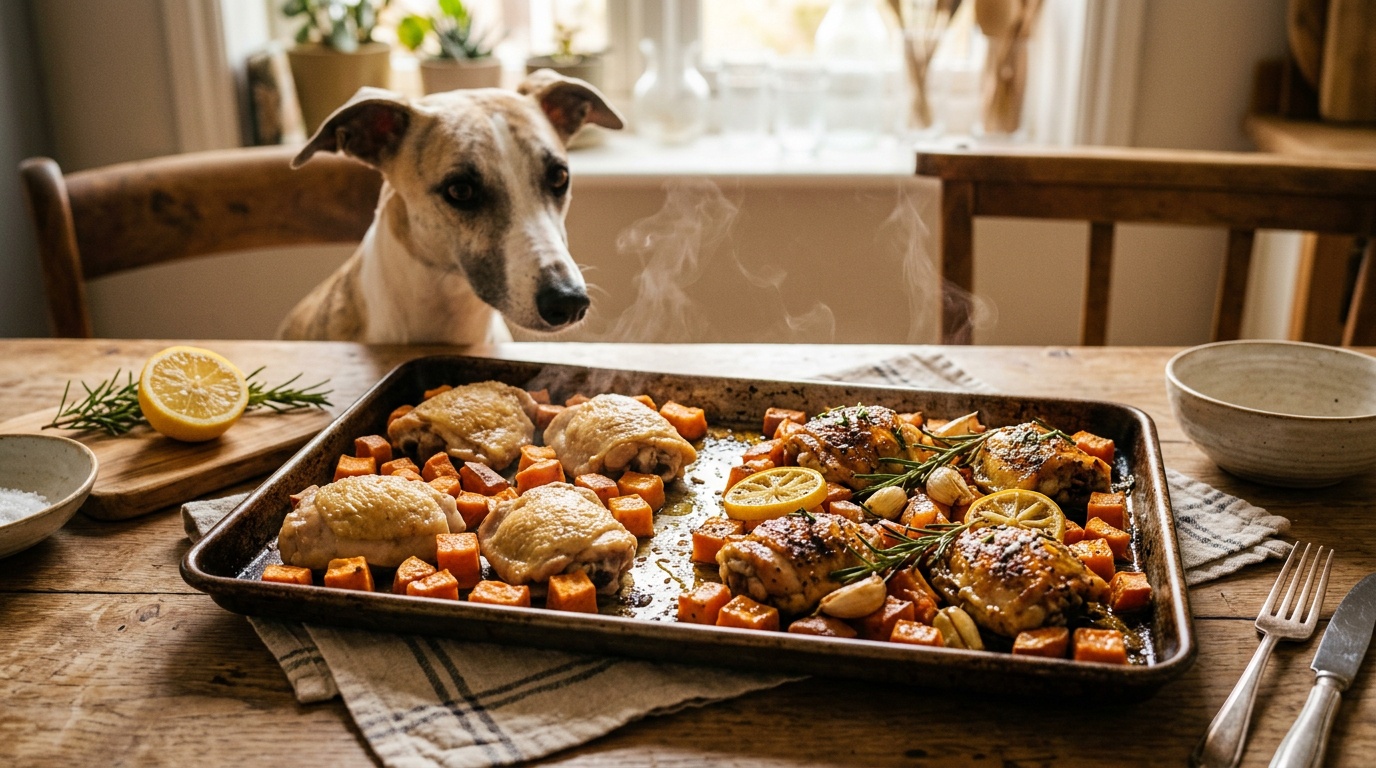
Sheet pan roasted chicken thighs with sweet potato and broccoli
8 minPrep time
28 minOven time
1 trayTo wash
All sizesPortions included
BatchFriendly

🍽️ The Concept

You're making sheet pan chicken anyway. You're not cooking twice — you're just setting aside one unseasoned chicken thigh and a corner of sweet potato and broccoli before the garlic, rosemary, lemon and salt go on your half. That's the whole trick. The oven does everything else, and your dog eats a genuinely nutritious home-cooked meal with zero extra time from you.

🧑‍🍳

Your Sheet Pan Dinner

  • Chicken thighs, olive oil
  • Garlic (2–3 cloves, crushed)
  • Rosemary, dried oregano
  • Lemon zest and juice
  • Flaked sea salt, black pepper
  • Sweet potato and broccoli alongside
  • Optional: chilli flakes, honey glaze
🐕

Your Dog's Bowl

  • Chicken thigh (plain, no skin)
  • Sweet potato (plain, no oil)
  • Broccoli (plain)
  • Salmon oil ❄️ cold
  • Eggshell calcium ❄️ cold
  • Nothing else — that's genuinely enough

Why This Bowl Works

🍗

Chicken Thigh

More iron, zinc, B12 and selenium than breast. Higher fat means more fat-soluble vitamins. Better flavour, and dogs prefer the richer taste too.

🍠

Sweet Potato

Beta-carotene (vitamin A precursor), potassium and prebiotic fibre. Slower-digesting carbohydrate than white potato — better blood sugar stability.

🥦

Broccoli

Sulforaphane activates detoxification pathways. Vitamin C, vitamin K and folate. High fibre. Safe and beneficial for dogs in moderate amounts.

🐟

Salmon Oil (Cold)

Chicken doesn't provide omega-3 DHA or EPA. Salmon oil fills this gap — stirred in cold after cooling to protect the fatty acids from heat damage.

🦴

Eggshell Calcium

Meat is high in phosphorus and low in calcium. Without a calcium source, long-term homemade feeding causes bone loss. Eggshell corrects this cold.

📦

Batch-Friendly

Cook a larger tray on Sunday. Portion your dog's food into containers. Refrigerate for 3–4 days or freeze for 2 months. Zero effort meals all week.

⚠️ Omega-3 Not Covered by Chicken — Add Salmon Oil Cold

Chicken (including thigh) provides virtually no DHA or EPA omega-3. These fatty acids are critical for brain function, coat health, joint lubrication and inflammation control. Salmon oil or sardine oil added cold after cooling covers this gap. One teaspoon per medium-sized dog per day is sufficient. Never add it to warm food — heat destroys DHA and EPA within minutes.

Portions by Dog Size

These are daily amounts. If feeding twice a day, split each total in half per meal. Adjust up or down by 10–15% based on your dog's body condition score.

IngredientAmountNotes
🍗 PROTEIN
Chicken thigh (skinless, boneless, plain)70 gNo seasoning, no oil, no skin
🥦 VEGETABLES
Sweet potato (plain, no oil)45 gRoasted or steamed — no butter, no salt
Broccoli (plain, no seasoning)35 gCooked until just tender — not mushy
❄️ COLD ADDITIONS — add after cooling completely
Salmon oil or sardine oil¼ tspCOLD
Eggshell calcium powder¼ tspCOLD
IngredientAmountNotes
🍗 PROTEIN
Chicken thigh (skinless, boneless, plain)140 gNo seasoning, no oil, no skin
🥦 VEGETABLES
Sweet potato (plain, no oil)90 gRoasted or steamed — no butter, no salt
Broccoli (plain, no seasoning)70 gCooked until just tender — not mushy
❄️ COLD ADDITIONS — add after cooling completely
Salmon oil or sardine oil½ tspCOLD
Eggshell calcium powder¼ tspCOLD
IngredientAmountNotes
🍗 PROTEIN
Chicken thigh (skinless, boneless, plain)250 gNo seasoning, no oil, no skin
🥦 VEGETABLES
Sweet potato (plain, no oil)160 gRoasted or steamed — no butter, no salt
Broccoli (plain, no seasoning)130 gCooked until just tender — not mushy
❄️ COLD ADDITIONS — add after cooling completely
Salmon oil or sardine oil1 tspCOLD
Eggshell calcium powder½ tspCOLD
IngredientAmountNotes
🍗 PROTEIN
Chicken thigh (skinless, boneless, plain)420 gNo seasoning, no oil, no skin
🥦 VEGETABLES
Sweet potato (plain, no oil)270 gRoasted or steamed — no butter, no salt
Broccoli (plain, no seasoning)210 gCooked until just tender — not mushy
❄️ COLD ADDITIONS — add after cooling completely
Salmon oil or sardine oil1½ tspCOLD
Eggshell calcium powder¾ tspCOLD

Ingredient Spotlight

🍗
Chicken Thigh vs BreastProtein · Iron · Zinc · B Vitamins

Most people default to chicken breast. Thigh is actually the better choice for dogs. It has more iron, more zinc, more B12 and higher levels of selenium — all nutrients that matter for thyroid function, immune health and energy metabolism. The slightly higher fat content in thigh also helps absorb fat-soluble vitamins A and K from the vegetables. Remove the skin before serving to keep fat levels reasonable.

🍠
Sweet PotatoBeta-Carotene · Potassium · Prebiotic Fibre

Sweet potato is one of the most consistently beneficial carbohydrates you can put in a dog's bowl. Beta-carotene converts to vitamin A for eye, skin and immune health. Potassium supports heart muscle and kidney function. The soluble fibre acts as a prebiotic, feeding the beneficial bacteria in the gut. It also has a lower glycemic index than white rice, producing a steadier energy curve rather than a spike.

🥦
BroccoliSulforaphane · Vitamin C · Vitamin K

Broccoli is one of the most studied vegetables for cancer-preventive compounds. Sulforaphane activates a cellular pathway called Nrf2, which upregulates the body's own antioxidant and detoxification systems. It also provides vitamin C (dogs synthesise their own, but dietary C adds to this) and vitamin K for blood clotting and bone mineralisation. Keep portions moderate — broccoli is in the Brassica family and can cause gas in large amounts.

⚠️ Max around 10% of the meal by weight. Large quantities of broccoli cause digestive upset.

🐟
Salmon OilDHA · EPA · Omega-3 · Cold Only

The most important addition to any chicken-based dog meal. Chicken simply doesn't contain DHA or EPA — the omega-3 forms that matter for brain, joint, coat and cardiovascular health. Salmon oil delivers both directly in their bioavailable form. Sardine oil works equally well and is often cheaper. Always add cold to a cooled bowl — DHA oxidises rapidly above 40°C and you're paying for a supplement that does nothing if you add it to warm food.

How to Make It

1

Preheat oven to 200°C

180°C fan, or 400°F. Line a large baking tray with baking paper. This is the only thing you need to think about while the oven heats up.

2

Prep everything at once

Dice sweet potato into 2cm cubes. Cut broccoli into florets. Remove skin from all the chicken thighs. Scatter the sweet potato and broccoli across the tray. Add all the chicken thighs together in one go.

💡 This whole step takes about 6 minutes if you have a decent knife.
✂️

Split the tray — dog's portion to one corner, untouched

Push your dog's chicken thigh and their portion of sweet potato and broccoli to one corner of the tray — or use a small separate oven-safe dish if you prefer. This portion gets nothing on it. No oil. No garlic. No lemon. Nothing. Everything else on the tray is yours to season.

🐕 This is the only step where you have to think about two different things at once. After this, you're just cooking your dinner.
3

Season your half

Drizzle olive oil generously over your chicken and vegetables. Add 2–3 cloves of crushed garlic, a good handful of dried rosemary (or fresh if you have it), lemon zest, salt and black pepper. Toss to coat. Optional: a drizzle of honey for a glaze, or chilli flakes if you like heat.

4

Roast — oven handles everything

Place the tray in the oven for 25–28 minutes. Check chicken reaches 74°C (165°F) internally, or that the juices run clear when pierced. Sweet potato should be tender and slightly caramelised. Broccoli should have a little colour on the tips. You don't need to check on it — that's the point.

5

Pull dog's portion, cool completely

Remove your dog's plain chicken, sweet potato and broccoli from the tray. Check the chicken is fully cooked through. Slice or pull the chicken into smaller pieces appropriate to your dog's size. Place in their bowl and let it cool to room temperature — at least 20 minutes. Don't rush this step.

🌡️ The bowl should be cool enough to hold your hand on it comfortably before the supplements go in.
6

Add cold supplements, serve

Once fully cooled: stir in salmon oil and eggshell calcium powder. Use the amounts from the portion table above for your dog's size. Mix well so the oil coats the food evenly. Serve immediately or cover and refrigerate for up to 3 days.

📦 Batch cooking this recipe

This is one of the best recipes for batch cooking. On Sunday, roast a larger tray with 3–4 plain chicken thighs and a bigger load of sweet potato and broccoli for your dog. Portion into individual containers (one per day), refrigerate for up to 4 days or freeze for up to 2 months. Add the salmon oil and eggshell calcium fresh each time you serve — not before freezing.

⚠️ Keep off the dog's portion

Breed Compatibility

✅ Great for these breeds
  • Labrador Retriever, Beagle, Cocker Spaniel — breeds that tend toward weight gain; this recipe is lean and portion-controlled
  • German Shepherd, Rottweiler, Boxer — higher-iron needs are met well by chicken thigh; good for active large breeds
  • Dogs transitioning off kibble — gentle and familiar ingredients, easy on the digestive system for first-time homemade feeders
  • Older dogs — soft-cooked sweet potato and broccoli, tender chicken, easy to chew and digest
⚠️ Adjust for these breeds
  • Miniature Schnauzer — prone to pancreatitis; remove the skin before cooking and keep the fat content low. Use breast instead of thigh if your dog has a history of pancreatic issues.
  • Dogs with Brassica sensitivity — some dogs produce excess gas from broccoli; substitute green beans or zucchini if this is an issue for your dog
  • Cavalier King Charles Spaniel (MVD) — heart-healthy: this recipe is appropriate, but always consult your vet on sodium and phosphorus management for dogs with diagnosed heart disease
🚫 Not ideal for
  • Dogs with confirmed chicken allergy — chicken is one of the most common protein allergens in dogs. Substitute turkey thigh using the same method and quantities.
  • Puppies under 12 weeks — these portions are calibrated for adult dogs. Puppy nutritional requirements are significantly different; consult a vet nutritionist for puppy-specific ratios.

🐕 Breed Spotlight: Beagle

If there is one breed that could have been the mascot for a "portion-controlled chicken and sweet potato" recipe, it's the Beagle. They are, without exaggeration, one of the most food-motivated breeds in existence. Their noses are extraordinary — originally bred to follow scent trails for hours — and they apply this same persistence to finding and eating any food left within reach. This makes them wonderful dogs and a particular challenge when it comes to weight management.

This recipe suits Beagles well for several reasons:

More Cook-Together Recipes

One cook, two dinners — the whole philosophy in one tray.

Browse All Recipes →