🚨 Do not start with a recipe if your dog is still vomiting
Call your veterinarian when vomiting and diarrhoea happen together. Seek urgent care for repeated vomiting, blood or black stool, a painful or swollen abdomen, dry heaving, weakness, pale gums, collapse, suspected poisoning or a dog who cannot keep water down.
Puppies, seniors, very small dogs and dogs with diabetes, kidney disease or another medical condition should be assessed sooner. This recipe begins only after vomiting is controlled and your veterinarian agrees.
A Corgi-sized recovery plan
Small, sturdy dogs such as Corgis can look deceptively cheerful while losing fluid. Do not judge recovery by tail wags alone. Watch water intake, gum moisture, urination, energy and the number of vomiting and diarrhoea episodes.
For Basil's size, the first serving would be a spoonful-sized tolerance test, not a normal dinner. The exact amount depends on weight, illness and veterinary advice.
🐕 Ingredients
Cooked weights. The 1:3 ratio keeps this temporary meal lower in fat than a meat-heavy bowl.
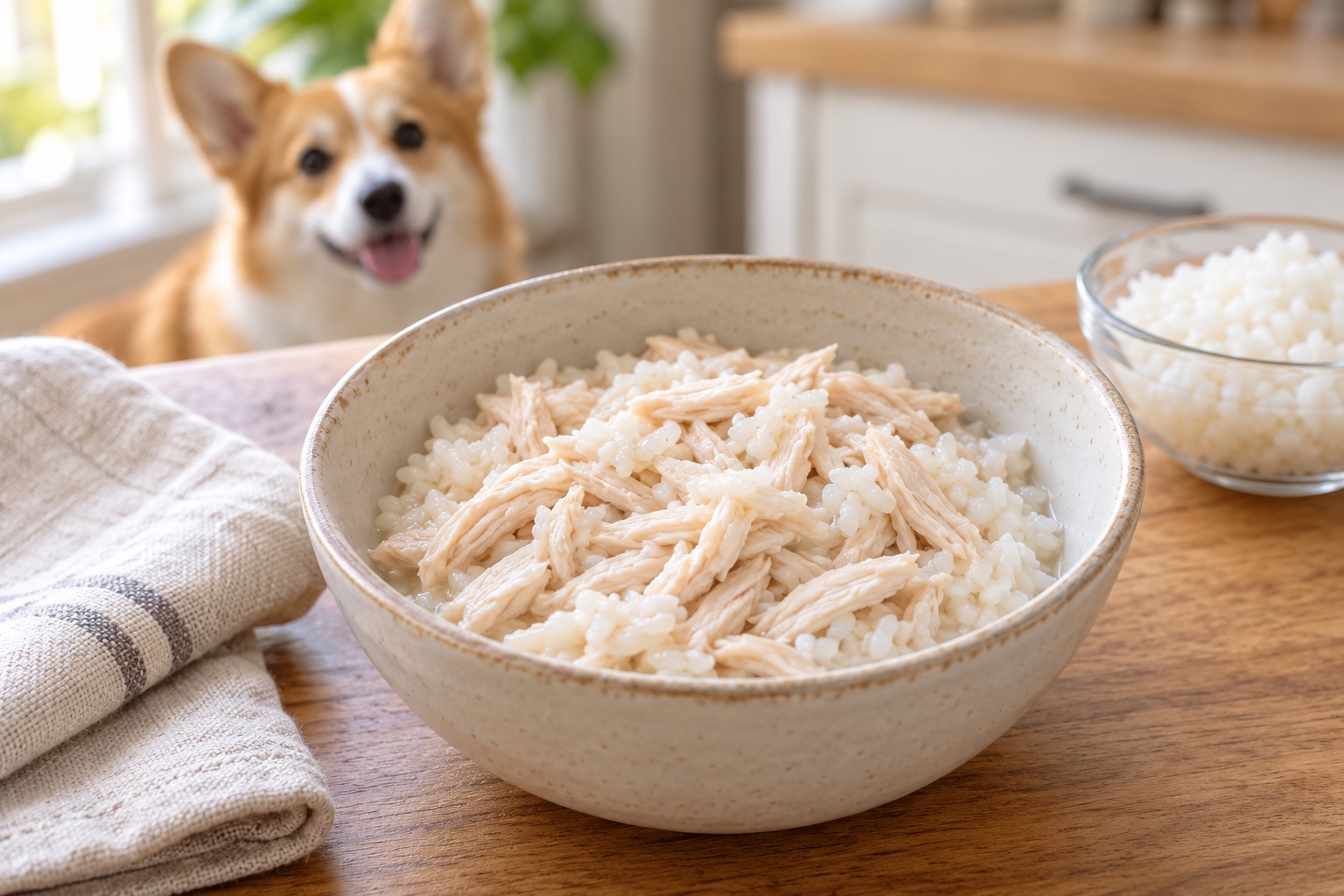
- 200 g · ~1⅓ cupscooked skinless chicken breast, very finely shreddedNo skin, bones, salt, oil or seasoning
- 600 g · ~3¾ cupsvery soft cooked white riceCook in plain water until softer than normal table rice
- As neededplain water to moistenDo not use stock unless your veterinarian approves the exact product
Nutritional profile
Approximate values calculated from typical USDA FoodData Central data for cooked skinless chicken breast and cooked white rice. Ingredient moisture and cooking method change the result. USDA FoodData Central.
Method
Cook the chicken plainly
Poach or boil skinless chicken breast in plain water until the centre reaches 74°C/165°F. Cool, then shred very finely. Discard skin, bones and cooking fat.
Make the rice extra soft
Cook white rice in more water than usual until the grains are soft and moist. Do not add salt, butter, stock or seasoning.
Mix by cooked weight
Combine one part chicken with three parts rice. Add a little plain water if your veterinarian has encouraged fluids and your dog keeps water down.
Cool completely
Serve at room temperature or gently warm. Never offer it hot.
Offer a tiny test meal
Use the amount your veterinarian recommends. For many small or medium adult dogs, this begins with only one or two tablespoons. Wait and watch before offering more.
Store safely
Refrigerate promptly in a sealed container for up to two days. Freeze unused portions. Discard food left at room temperature for more than two hours.
Why there is no eggshell, sardine or oil
Eggshell calcium: calcium matters in a regular homemade diet, but correcting this temporary meal can encourage people to feed it longer than intended. Do not add eggshell unless your veterinarian formulates an extended recovery diet.
Sardines and fish oil: they can be useful in a normal balanced diet, but they add fat and flavour during a period when the gut may tolerate less. Reintroduce them only after stools and appetite are normal and your veterinarian agrees.
For more than a few days: use a complete veterinary gastrointestinal diet or a recipe specifically formulated for your dog. Chicken and rice is deficient in multiple essential nutrients and does not meet NRC or AAFCO expectations for ongoing feeding.
Feeding and transition
Feed small portions more frequently rather than one large meal. If vomiting returns, your dog refuses water, becomes quiet or weak, or diarrhoea worsens, stop home management and contact the vet.
Once stools are improving and your dog is acting normally, transition back according to veterinary advice. A common approach is to mix increasing amounts of the regular food into the recovery meal over several days.
Do not use this recipe for puppies, pregnancy, pancreatitis, food allergy, kidney disease or another diagnosed condition without direct veterinary guidance.
⚠️ Foods and medicines to avoid
No onion, garlic, leek, chives, salt, butter, oil, rich meat, skin, bones, dairy, treats or seasoned stock. Never give ibuprofen, paracetamol, aspirin, Pepto-Bismol or loperamide unless a veterinarian specifically instructs you for this dog.
Read the full vomiting and diarrhoea safety guide before using the recipe.
Vet check comes first
Check with your veterinarian before feeding this recovery meal. Vomiting with diarrhoea can require examination, fluids, anti-nausea treatment, parasite testing or imaging. Food may support recovery, but it does not diagnose or treat the cause.
Understand the nutritional gap
This recipe is deliberately temporary. Read Chicken & Rice for Dogs: What's Missing From the Bowl? before considering it for longer-term feeding.