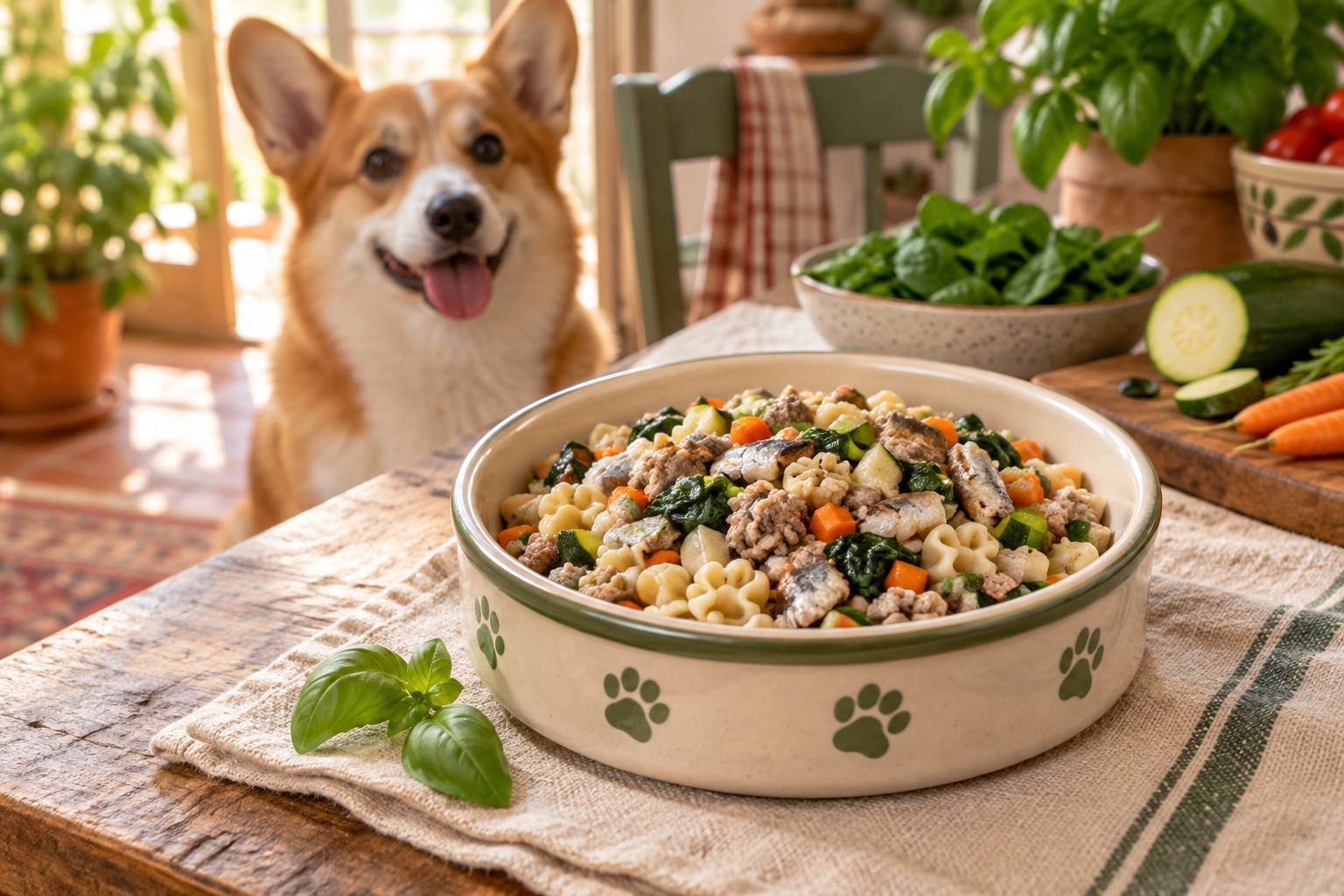
Why this bowl suits a Corgi
Corgis are enthusiastic eaters in compact bodies, so energy density and portion size matter. This recipe uses lean turkey and plenty of vegetables rather than a heavy cheese or cream sauce. The pasta provides digestible carbohydrate for an active adult, while the portion guide helps keep the bowl sensible for a breed that can gain weight easily.
Basil would vote for a full trattoria-sized serving. His waistline gets the final say. Start with the calorie calculation for your own dog, weigh the portion, and adjust according to body condition and activity.
This recipe is intended for healthy adult dogs. It is not formulated for puppies, pregnancy, growth or a medical diet.
🐕 Ingredients
All quantities are cooked weights. Cups are approximate, so use grams for the nutrition calculation.
- 400 g · ~2¾ cupslean cooked turkey, finely crumbled or choppedPlain, skinless and cooked through
- 300 g · ~2 cupscooked small pasta shapesCook in plain water with no salt
- 150 g · ~1 cupcooked courgette, finely diced
- 100 g · ~⅔ cupcooked carrot, finely diced
- 60 g · ~⅓ cupcooked spinach, chopped and squeezed dry
- 60 g · ~⅓ cupplain sardines in water with soft bones, drained and mashedChoose no-added-salt sardines with no sauce or seasoning
- 10 g · 2 tspextra virgin olive oil
- ~3.8 g · ~⅞ tspfinely ground eggshell calcium powderUse the weight that supplies approximately 1,550 mg elemental calcium; spoon measures vary
Nutritional profile
Calculated from cooked ingredient weights using typical USDA FoodData Central values. Before eggshell, the batch is estimated to provide about 450 mg calcium and 1,665 mg phosphorus. Adding approximately 1,550 mg elemental calcium gives an estimated ratio near 1.20:1. Brands, draining and cooking losses change the result. Check USDA FoodData Central.
Method
Cook the pasta
Boil the pasta in plain water until soft. Do not add salt, stock cubes or sauce. Drain and set aside.
Cook the turkey
Cook the turkey in a wide pan over medium heat, breaking it into small pieces. Continue until no pink remains and the centre has reached 74°C/165°F.
Soften the vegetables
Add the courgette and carrot with a splash of water. Cover and cook gently until tender. Stir in the spinach for the final minute.
Bring the bowl together
Mix the cooked pasta, turkey and vegetables. Fold in the mashed sardines so the soft bones are distributed evenly.
Cool, then add the supplements
Let the mixture cool to room temperature. Weigh the eggshell powder according to its elemental calcium content, then mix it through the entire batch extremely well. Stir in the olive oil last.
Portion and store
Divide by weight into five equal portions. Refrigerate for up to three days or freeze individual portions for up to two months. Thaw in the refrigerator and serve cool or gently warmed, never hot.
Calcium, sardines and a complete diet
Eggshell calcium: the target is approximately 1,550 mg elemental calcium for this batch. If your powder supplies 1,800 mg per teaspoon, that is about ⅞ teaspoon, but weighing it is more reliable. Check the label because homemade and commercial powders differ.
Sardines: the soft edible bones add calcium, while the fish contributes EPA and DHA. The omega-3 amount varies by brand and draining, so sardines should not be treated as an exact therapeutic fish-oil dose.
For regular feeding: correcting calcium does not supply every vitamin and trace mineral required by NRC or AAFCO. Ask your veterinarian or a veterinary nutritionist to select a canine home-cooking vitamin and mineral supplement for this exact recipe and use its label dose. Do not add a second calcium product unless the formulation specifically requires it.
Portion guide
The five portions are a kitchen convenience, not five universal meals. A 280 kcal portion may suit part of one day's food for some active medium dogs, but it can be too much for a small or less active dog.
Use the Breed-to-Bowl calorie calculator as a starting point, then compare the result with your veterinarian's advice. Watch body condition over time and reduce the portion if your dog's waist begins to disappear.
When introducing a new recipe, replace only a small amount of the usual food at first and increase gradually if stools remain normal.
⚠️ Keep the human pasta extras away
Do not add onion, garlic, leek, chives, salty stock, pesto, tomato pasta sauce, wine, raisins, grapes, chilli or large amounts of cheese. Many jarred sauces and stocks contain onion or garlic even when the flavour is not obvious.
Keep xylitol, chocolate and macadamias away from the preparation area too. If your dog eats a potentially toxic ingredient, contact your veterinarian or an animal poison service promptly. See the ASPCA list of people foods to avoid.
Before this goes in the bowl
Check with your veterinarian before changing your dog's diet. Dogs with pancreatitis, kidney disease, liver disease, urinary stones, food allergies or another medical condition need an individually chosen recipe. Puppies, pregnant dogs and nursing dogs have different nutrient requirements and should not use this adult recipe.
How the calcium was chosen
Our eggshell calcium guide explains why this amount is recipe-specific and why a universal teaspoon rule is unreliable.