Raw BARF Beef Medallion for Dogs
Grass-fed beef mince, raw chicken liver, bone meal, grated seasonal vegetables and sardine oil — assembled cold for a biologically complete raw meal your dog will go absolutely wild for.
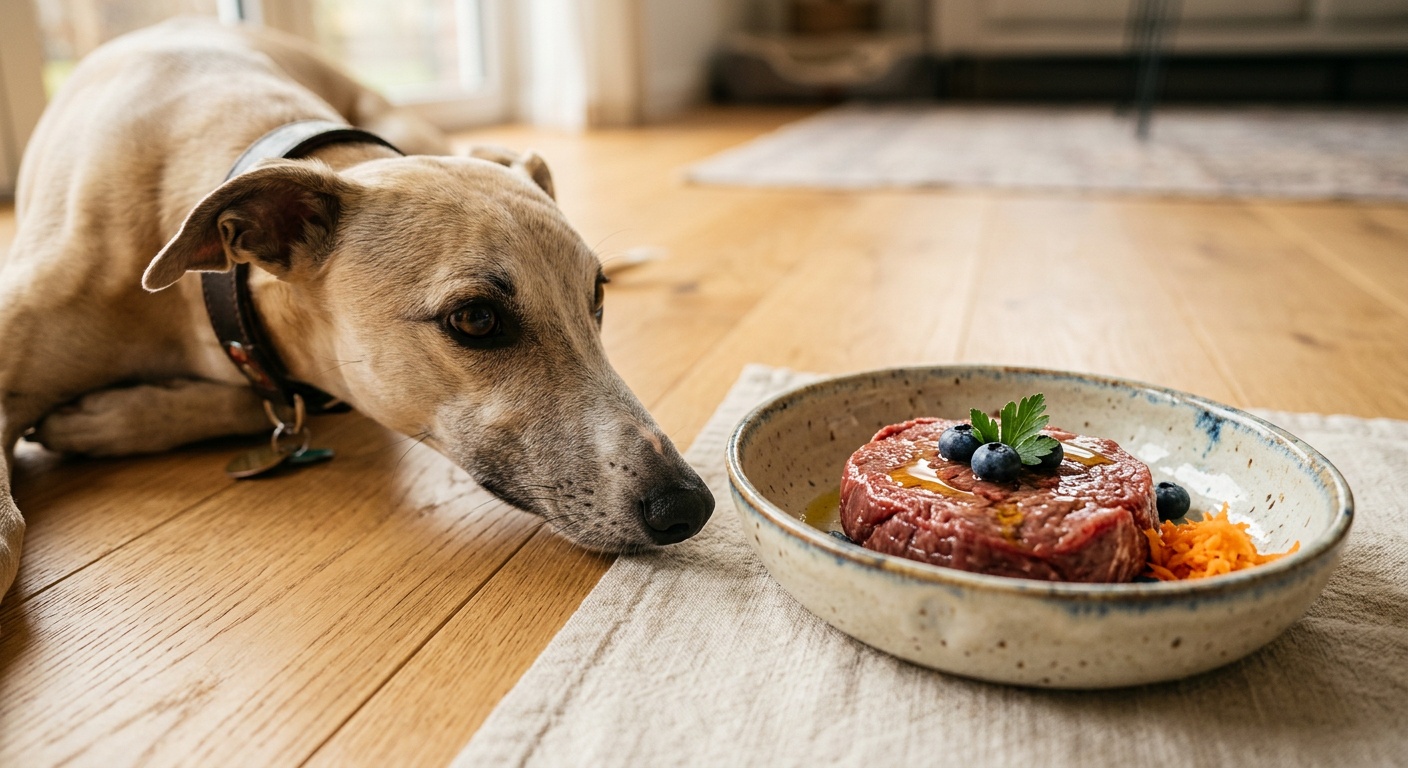
Grass-fed beef mince, raw chicken liver, bone meal, grated seasonal vegetables and sardine oil — assembled cold for a biologically complete raw meal your dog will go absolutely wild for.
Raw protein retains full enzyme activity and amino acid profiles that cooking degrades — supporting muscle, coat and immune function.
Raw meat textures and the chewing required to process it reduce plaque and tartar buildup naturally, without brushing.
The omega-3 fatty acids in sardine oil and the natural zinc in beef organ support a visibly shinier coat and reduced shedding within 4–6 weeks.
Raw food supports a more diverse gut microbiome. Many raw-fed dogs show firmer stools, less gas and reduced digestive sensitivity.
Chicken liver is gram-for-gram one of the most nutrient-dense foods on earth — packed with B12, Vitamin A, iron, folate and CoQ10.
Bone meal provides calcium and phosphorus in the correct ratio for dogs. No supplements needed — everything is in the whole food ingredients.
Remove the beef mince, chicken liver and chicken heart from the freezer the night before and thaw in the refrigerator (never on the bench at room temperature). Place in a sealed container to prevent cross-contamination with other fridge items. The meat should be cold but fully thawed before assembly.
💡 Never refreeze meat that has been thawed unless cooked firstFinely dice the raw chicken liver and chicken hearts into small pieces — roughly 1cm cubes. This prevents your dog from bolting large chunks and allows the organ to be distributed evenly through the meal. Liver especially is rich — the small pieces help regulate the amount eaten.
💡 Organ meat should not exceed 10–15% of a raw diet. Liver over-supplementation causes Vitamin A toxicity over timeUsing a box grater or food processor, grate the carrot and zucchini into fine shreds. Finely chop the spinach. Raw vegetables in large pieces pass through a dog's digestive system largely undigested — fine grating breaks the cell walls and makes nutrients accessible. You can also lightly wilt the spinach in hot water for 30 seconds to deactivate oxalates, then drain and cool before using.
Place the beef mince into a chilled bowl. Add the diced liver and hearts. Add the grated vegetables. Sprinkle over the bone meal and kelp powder. Add the sardine oil and Vitamin E (pierce the capsule and squeeze over). If using, add the kefir last. Using a spoon or your hands (with gloves), mix until everything is evenly distributed throughout the mince.
💡 Serve immediately once mixed, or refrigerate and serve within 2 hours. Do not leave assembled raw meals at room temperatureFor a gourmet presentation, press the mixture into a ring mould or use your hands to form a thick round patty — a "medallion." This is entirely optional but makes portioning easy and looks beautiful in the bowl. You can also pre-portion into balls and freeze individual servings for up to 3 months.
Place the medallion in a clean stainless steel or ceramic bowl. Serve cold — dogs are perfectly designed to eat cold raw food. Remove any uneaten food after 30 minutes. Wash the bowl with hot soapy water immediately after. Never leave raw food in the bowl between meals.
💡 Do not microwave to warm — this starts cooking the meat and defeats the purpose of raw feedingNutritional values are estimates based on standard USDA raw food data. For long-term raw feeding, consider running your recipe through a veterinary nutritionist or software like NutriScan to verify completeness for your specific dog's weight and life stage.
Raw feeding generally follows the 2–3% of body weight guideline per day, split across 1–2 meals. Active dogs and growing puppies need the higher end; seniors and sedentary dogs the lower end.
| Dog Size | Body Weight | Daily Serving | Meals Per Day | Adjust For |
|---|---|---|---|---|
| Toy / Small | 3–8kg | 60–240g total | 2 meals | Very active small dogs — increase to 3% |
| Medium | 10–20kg | 200–600g total | 1–2 meals | This recipe serves 1 meal for a 15–20kg dog |
| Large | 25–40kg | 500g–1.2kg total | 1–2 meals | Working/sporting breeds may need 3% BW |
| Giant | 45kg+ | 900g–1.5kg total | 1–2 meals | Monitor weight monthly and adjust accordingly |
| Puppies (6–12mo) | Any | 5–8% of body weight | 3 meals | Growing puppies need more calcium — increase bone meal |
| Seniors (7+ years) | Any | 2% of body weight | 2 meals | Reduce organ if kidney function is compromised |
Make a week's worth in one go: mix 1–2kg of mince with proportional organs, vegetables and supplements. Portion into individual serving sizes, shape into medallions, and place on a lined baking tray. Freeze flat for 2 hours until firm, then transfer to labelled zip-lock bags. Thaw one serving in the fridge overnight for each meal. Frozen raw meals keep for up to 3 months.
Raw feeding is safe when done correctly — using human-grade meat, freezing prior to use, handling hygienically and balancing nutrients properly. Millions of dogs worldwide eat raw diets with excellent health outcomes. The risks come from improper sourcing, poor hygiene or nutritionally unbalanced meals over the long term. This recipe includes bone meal and organ to provide nutritional completeness that a simple "meat only" raw meal lacks.
Yes, but puppies need more calcium and phosphorus in their diet than adults, and the ratios are critical for proper bone development. Increase bone meal slightly and feed 3 smaller meals per day rather than 1–2. Avoid raw pork for puppies entirely. Consult a vet or veterinary nutritionist before starting raw feeding for puppies under 6 months.
A plain meat-only raw diet is not nutritionally complete. This recipe is designed to be well-rounded by including liver (fat-soluble vitamins, B12), bone meal (calcium/phosphorus), kelp (iodine), sardine oil (EPA/DHA) and Vitamin E (antioxidant/prevents fat rancidity). For long-term raw feeding you may also want to add zinc, manganese and Vitamin D if you are not rotating proteins and organs regularly.
Transition gradually over 2–3 weeks. Week 1: replace 25% of their current food with raw. Week 2: 50% raw. Week 3: 75% raw. Week 4: full raw. This gives the gut microbiome time to adjust and makes digestive upset (loose stools, extra gas) much less likely. Some dogs transition faster; others need 4–6 weeks. Follow your dog's stomach, not a strict timeline.
Yes — this is sometimes called "hybrid feeding" and is a great middle ground. Many pet owners feed raw for one meal and a high-quality cooked homemade meal for the other. The old concern that "raw and cooked digest at different rates and cannot be mixed" has not been supported by research. Mix freely based on what works for your dog and your schedule.
Yes — this is one of the most commonly reported changes in raw-fed dogs, and it is usually positive. Raw-fed dogs typically produce smaller, firmer, less smelly stools because more of the food is digested and absorbed. You may also see a brief period of loose stools (3–5 days) during transition as the gut microbiome adjusts. If diarrhoea persists beyond a week, slow the transition further or consult your vet.
This recipe is designed to be nutritionally well-rounded, but home ingredient-level calculations are not equivalent to professional nutritional formulation. A genuinely complete daily diet requires formal assessment of energy density, all essential amino acids, omega-3:6 ratios, and the full mineral and vitamin profile — including zinc, copper, manganese, selenium, iodine, and all B vitamins. It has not been reviewed by a board-certified veterinary nutritionist (DACVN). For dogs eating this as a sole long-term diet — especially puppies, seniors, or dogs with health conditions — a formal nutritional review is strongly recommended before feeding exclusively.
Our recipe generator creates balanced raw and cooked recipes tailored to your dog's exact size, breed and health goals.
Generate Free Recipe →