Slow-cooked beef in bone broth with broccoli, kale, and sweet potato — topped cold with apple, strawberry, and blueberries. Every ingredient chosen for its quercetin or fisetin content, the flavonoids studied in longevity research for senescent cell support.
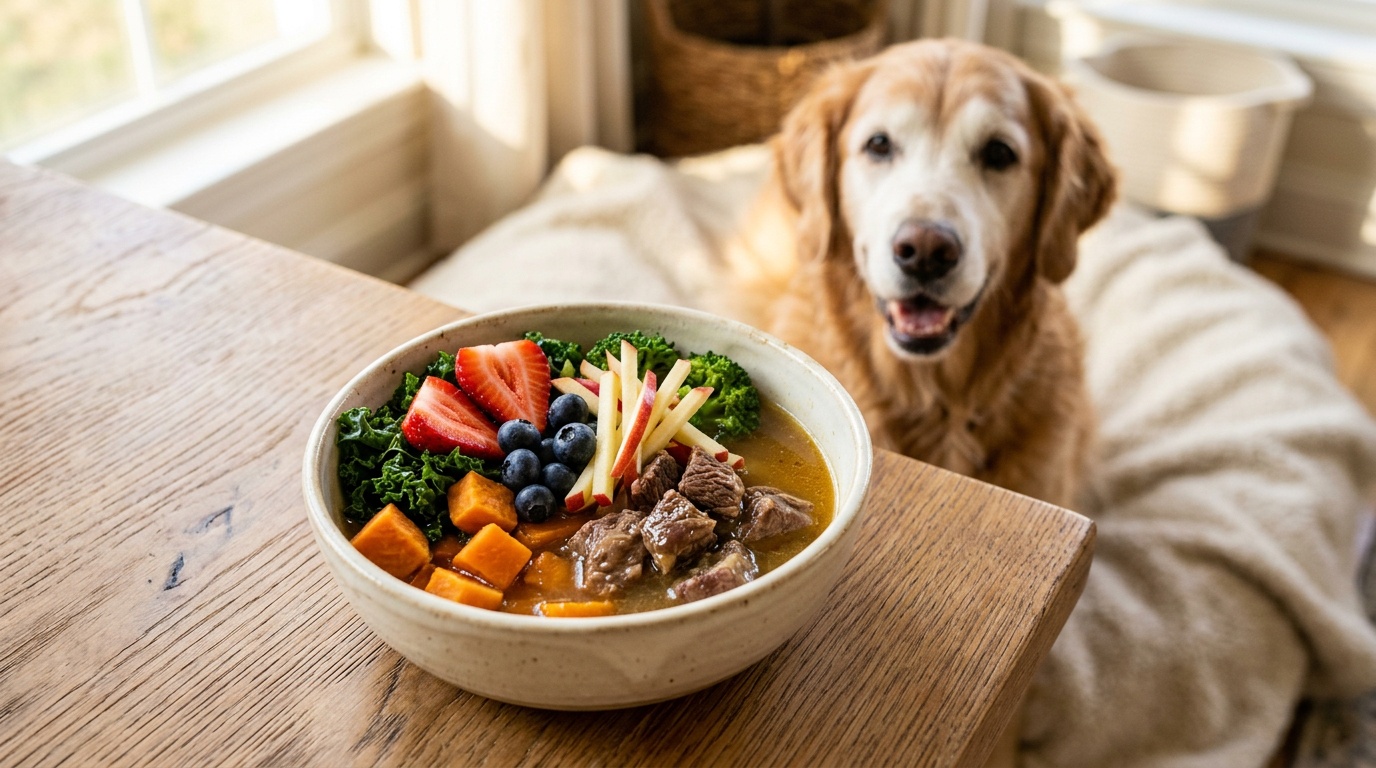
Apple skin, broccoli, and kale are three of the most accessible dietary sources of quercetin — studied as a natural senolytic compound
Strawberry is the richest food source of fisetin, the flavonoid that performed well in the 2018 EBioMedicine aging study
Blueberries add anthocyanins and additional quercetin alongside one of the widest polyphenol profiles in any common fruit
Simmered in broth rather than browned or roasted — moist low-heat cooking keeps AGE formation minimal
Salmon oil added cold after cooling provides DHA and EPA that beef and plant ingredients cannot supply
Eggshell calcium powder corrects the Ca:P imbalance that meat-only meals create
| Ingredient | Amount | Notes |
|---|---|---|
| Protein | ||
| Lean beef mince | 60g | Simmered in broth, not browned |
| Unsalted bone broth | ½ cup | Cook the beef in this |
| Cooked Vegetables | ||
| Broccoli florets | 20g | Lightly steamed 3–4 min quercetin |
| Kale, chopped | 10g | Lightly steamed quercetin |
| Sweet potato | 15g cooked | Boiled or steamed |
| Cold Toppings — Add After Cooling | ||
| Apple with skin | 2–3 thin slices | Seeds and core removed quercetin+fisetin |
| Strawberry | ½ berry, sliced | fisetin |
| Blueberries | 3–4 berries | quercetin+anthocyanins |
| Supplements — Add Cold After Cooling | ||
| Salmon or sardine oil | ¼ tsp | add cold Heat destroys omega-3 |
| Eggshell calcium powder | ⅛ tsp | add cold Corrects Ca:P ratio |
Beef is an omega-6 protein. ¼ tsp salmon or sardine oil added cold after cooking provides DHA and EPA. Never add fish oil to warm food — heat destroys the fatty acids. For small dogs under 5kg, a small drop (⅛ tsp) is sufficient.
| Ingredient | Amount | Notes |
|---|---|---|
| Protein | ||
| Lean beef mince | 130g | Simmered in broth, not browned |
| Unsalted bone broth | 1 cup | Cook the beef in this |
| Cooked Vegetables | ||
| Broccoli florets | 40g | Lightly steamed 3–4 min quercetin |
| Kale, chopped | 20g | Lightly steamed quercetin |
| Sweet potato | 35g cooked | Boiled or steamed |
| Cold Toppings — Add After Cooling | ||
| Apple with skin | ¼ apple, sliced thin | Seeds and core removed quercetin+fisetin |
| Strawberry | 1 berry, sliced | fisetin |
| Blueberries | 6–8 berries | quercetin+anthocyanins |
| Supplements — Add Cold After Cooling | ||
| Salmon or sardine oil | ½ tsp | add cold Heat destroys omega-3 |
| Eggshell calcium powder | ¼ tsp | add cold Corrects Ca:P ratio |
½ tsp salmon or sardine oil provides a good DHA and EPA dose for a 10–25kg dog. Add after the bowl is fully cooled to room temperature. Warm food breaks down omega-3 fatty acids rapidly — always add cold.
| Ingredient | Amount | Notes |
|---|---|---|
| Protein | ||
| Lean beef mince | 220g | Simmered in broth, not browned |
| Unsalted bone broth | 1½ cups | Cook the beef in this |
| Cooked Vegetables | ||
| Broccoli florets | 65g | Lightly steamed 3–4 min quercetin |
| Kale, chopped | 35g | Lightly steamed quercetin |
| Sweet potato | 60g cooked | Boiled or steamed |
| Cold Toppings — Add After Cooling | ||
| Apple with skin | ½ apple, sliced thin | Seeds and core removed quercetin+fisetin |
| Strawberry | 1–2 berries, sliced | fisetin |
| Blueberries | 10–12 berries | quercetin+anthocyanins |
| Supplements — Add Cold After Cooling | ||
| Salmon or sardine oil | ¾–1 tsp | add cold Heat destroys omega-3 |
| Eggshell calcium powder | ⅜ tsp | add cold Corrects Ca:P ratio |
Large dogs need more omega-3 to balance the omega-6 from beef. ¾–1 tsp salmon oil is appropriate for dogs over 25kg. For giant breeds (40kg+), increase to 1 tsp. Always add cold after cooking.
Apple skin contains significantly more quercetin and fisetin than the flesh — always leave the skin on. Remove seeds and core completely (seeds contain amygdalin). Slice thin and add cold to preserve polyphenol content.
Strawberries contain the highest concentration of fisetin of any common food — the specific compound highlighted in the 2018 EBioMedicine study on aging. Use fresh or unsweetened frozen, never in syrup or jam.
Provides both quercetin and sulforaphane (a separate anti-inflammatory compound). Steam rather than boil — boiling leaches water-soluble compounds. Don't serve raw in large amounts; lightly steamed is ideal for digestibility.
High quercetin content alongside vitamin K and manganese. Always serve cooked or lightly steamed — raw kale in large amounts can affect thyroid function in sensitive dogs. Small steamed amounts are perfectly safe.
One of the most polyphenol-dense fruits available. Adds quercetin plus a broad anthocyanin profile that broccoli and kale don't provide. Add cold and uncooked — cooking destroys anthocyanin content significantly.
Using bone broth as the cooking liquid serves two purposes: it keeps the cooking temperature at 100°C (low-AGE range) and adds glycine, glucosamine, and gelatin. Always use unsalted — commercial broth is often high in sodium.
Every ingredient choice here maps to a specific mechanism from the Zombie Cell post. Quercetin from apple, broccoli and kale. Fisetin from strawberry. Anthocyanins from blueberries. Cooked at low heat in broth to minimise AGE formation. Omega-3 added cold to maximise bioavailability. This bowl doesn't promise to cure aging — but it does put together everything we currently have evidence for in a format your dog will actually eat.
Add the beef mince and bone broth to a small pot. Break up the mince with a spoon. Bring to a very gentle simmer over low heat (not a rolling boil). Cook for 20–25 minutes, stirring occasionally, until the beef is completely cooked through. The key here is low and slow in liquid — this is what keeps AGE formation minimal.
💡 Do not brown the beef first. Maillard browning creates AGEs. We want the beef cooked through but not coloured.While the beef cooks, steam the broccoli florets and chopped kale for 3–4 minutes until just tender. Don't overcook — you want them soft enough to eat but not mushy. Steaming caps the temperature at 100°C, which is the same reason we use boiling water: the Maillard reaction barely activates below 150°C.
Boil or steam sweet potato until soft. This can be batch-cooked — sweet potato keeps well in the fridge for 4 days and is easy to portion from. It adds gentle carbohydrate energy and beta-carotene without high AGE content (wet cooking method).
This is a non-negotiable step. Set all cooked components aside and allow them to cool to room temperature — ideally for 20–30 minutes. You can batch cook the beef and broth ahead of time and refrigerate: assemble from cold. Salmon oil added to warm food loses its DHA and EPA rapidly. Eggshell calcium is fine at any temperature but it's easier to add everything together.
⚠️ Never add fish oil to warm food. The omega-3 fatty acids degrade with heat. Always add cold.Combine cooled beef (with any remaining broth), steamed broccoli, kale, and sweet potato in the bowl. Lay sliced apple, strawberry, and blueberries on top. Drizzle salmon oil over everything, then sprinkle eggshell calcium. Mix gently before serving so the polyphenol-rich fruit distributes through the bowl.
The beef and broth component keeps refrigerated for up to 3 days. The steamed vegetables keep for 2 days. Add the fruits, fish oil, and calcium fresh at each serving — these should never be pre-mixed and stored. For batch cooking, prepare the beef and vegetable components in bulk and portion into serving containers. Add cold toppings at meal time.
The Senolytic Bowl is particularly meaningful for Bernese Mountain Dogs — one of the shortest-lived large breeds, with a median lifespan of only 7–8 years. Cancer rates in Berners are estimated at over 60%, significantly higher than the average for large breeds. This isn't coincidental: faster aging, higher IGF-1, and accumulating senescent cell burden may all be connected. The quercetin and fisetin-rich ingredients in this bowl address the same inflammatory and cellular aging pathways that researchers believe accelerate disease in large and giant breeds.
Read the full Zombie Cell post — why senescent cells accumulate in aging dogs, what the SASP is, and which foods the research is focusing on.
Read: The Zombie Cell Problem →