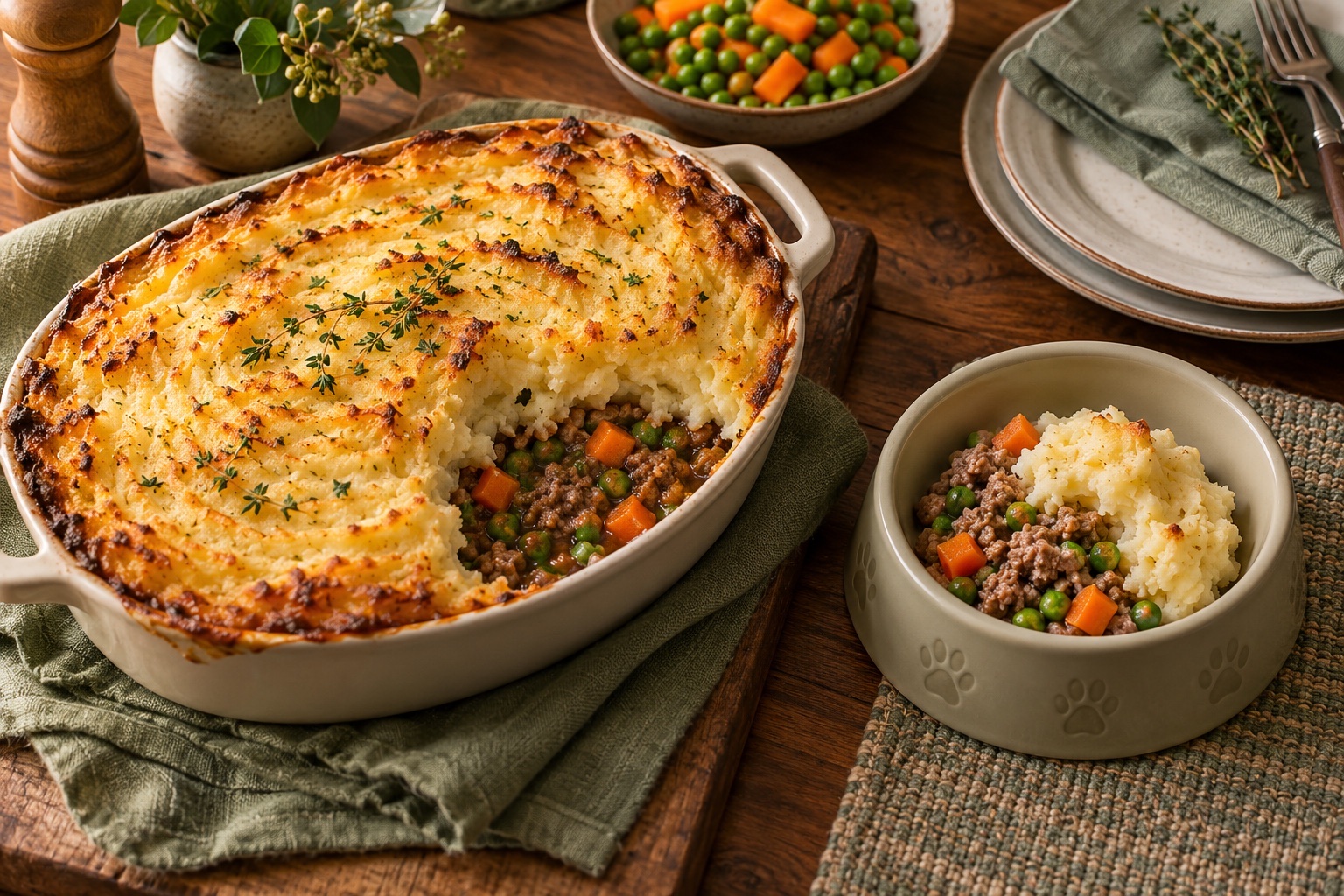
Why lamb makes it shepherd's pie
Shepherd's pie is traditionally made with lamb; the beef version is cottage pie. This cook-together method keeps that identity on the human table while giving the dog a much plainer plate. The two dishes share lamb, potato, carrot and peas, but they stop being one recipe at the separation point.
The dog version contains no onion, garlic, salty stock, Worcestershire sauce, butter or gravy. It is deliberately presented as an occasional meal because its calcium-to-phosphorus ratio and micronutrient profile do not meet the standard for a complete everyday diet.
🐕 Dog-side ingredients
Cooked weights. Makes approximately 800 g; divide into six equal portions.
- 200 g · ~1½ cupscooked lean lamb mince, drained
- 400 g · ~2½ cupsplain boiled potato, peeled and mashed with water only
- 100 g · ~⅔ cupcooked carrot, finely diced
- 100 g · ~⅔ cupcooked green peas
- As neededplain cooking water, no salt or stock
👤 Human-side ingredients
For six servings.
- 500 glean lamb mince
- 1 kgfloury potatoes, peeled and chopped
- 1 largeonion, finely chopped
- 2 clovesgarlic, minced
- 2 mediumcarrots, diced
- 150 ggreen peas
- 2 tbsptomato paste
- 400 mllamb or beef stock
- 1 tbspWorcestershire sauce
- 40 g + 80 mlbutter and milk for the mash
- To tastethyme, black pepper and salt
Method
Boil the potatoes
Cook all potatoes in plain water until tender. Remove and weigh 400 g for the dog bowl. Mash that portion with a little plain cooking water only. Finish the human potatoes separately with butter, milk and seasoning.
Cook the dog vegetables
Steam or boil 100 g carrot and 100 g peas without stock or salt. Keep them separate from the human pan.
Brown the lamb in two stages
In a clean unseasoned pan, cook 200 g lamb thoroughly, breaking it into small pieces. Drain excess fat and place it in the dog bowl. Wash the pan, then brown the remaining 500 g lamb for the human filling.
There is no safe point later in the human gravy to take food back out. Keep the dog bowl on another bench.
Build the human filling
Add onion and carrot to the human lamb and cook until soft. Add garlic, tomato paste and thyme. Stir in stock and Worcestershire sauce, then simmer until thick. Fold in the human peas and season.
Assemble and bake
Spoon the human filling into a baking dish, top with the butter-and-milk mash and roughen with a fork. Bake at 200°C/400°F for 25 to 30 minutes until bubbling and golden.
Cool and portion the dog batch
Mix the plain lamb, potato, carrot and peas. Divide by weight into six portions of about 133 g. Serve cool or gently warmed. Refrigerate up to three days or freeze promptly.
Dog batch nutritional profile
Estimates use typical USDA FoodData Central values for cooked ground lamb, boiled peeled potato, cooked carrots and cooked peas. Approximate batch calcium 123 mg and phosphorus 734 mg. Actual mince fat level, draining and cooking yield will change the result.
Calcium, fish oil and complete formulation
Eggshell calcium and marine omega-3 can be useful in a properly formulated home diet, but adding guessed amounts here would create false confidence. Calcium must be calculated from the batch's measured phosphorus and existing calcium. Fish oil must be specified by combined EPA and DHA, while vitamin E and the rest of the micronutrient profile also need checking.
If you want to feed this style of meal regularly, take these cooked weights to your veterinarian or a veterinary nutritionist and request a complete recipe with a named supplement and exact dose. Read the calcium guide before changing the formula.
Portion note: 172 kcal can be a large share of a small dog's day, especially for a Corgi. Use the calorie calculator as a starting point and monitor body condition.
⚠️ Safety notes
Never put onion, garlic, chives, leeks, salty stock, gravy, Worcestershire sauce or seasoned mash in the dog portion. Keep xylitol, grapes, raisins, chocolate, macadamias, alcohol and cooked bones away from dogs. Choose lean lamb and drain it well; a fatty serving may be inappropriate for dogs with pancreatitis or sensitive digestion.
Check with your veterinarian before changing your dog's diet. Puppies, pregnant or nursing dogs, and dogs with kidney, liver, pancreatic, urinary or allergic disease need individual advice.