🇹🇭 Thai 🍚 Rice Porridge 🌿 Anti-Inflammatory 🐾 All Life Stages

Thai Khao Tom Gai 🇹🇭

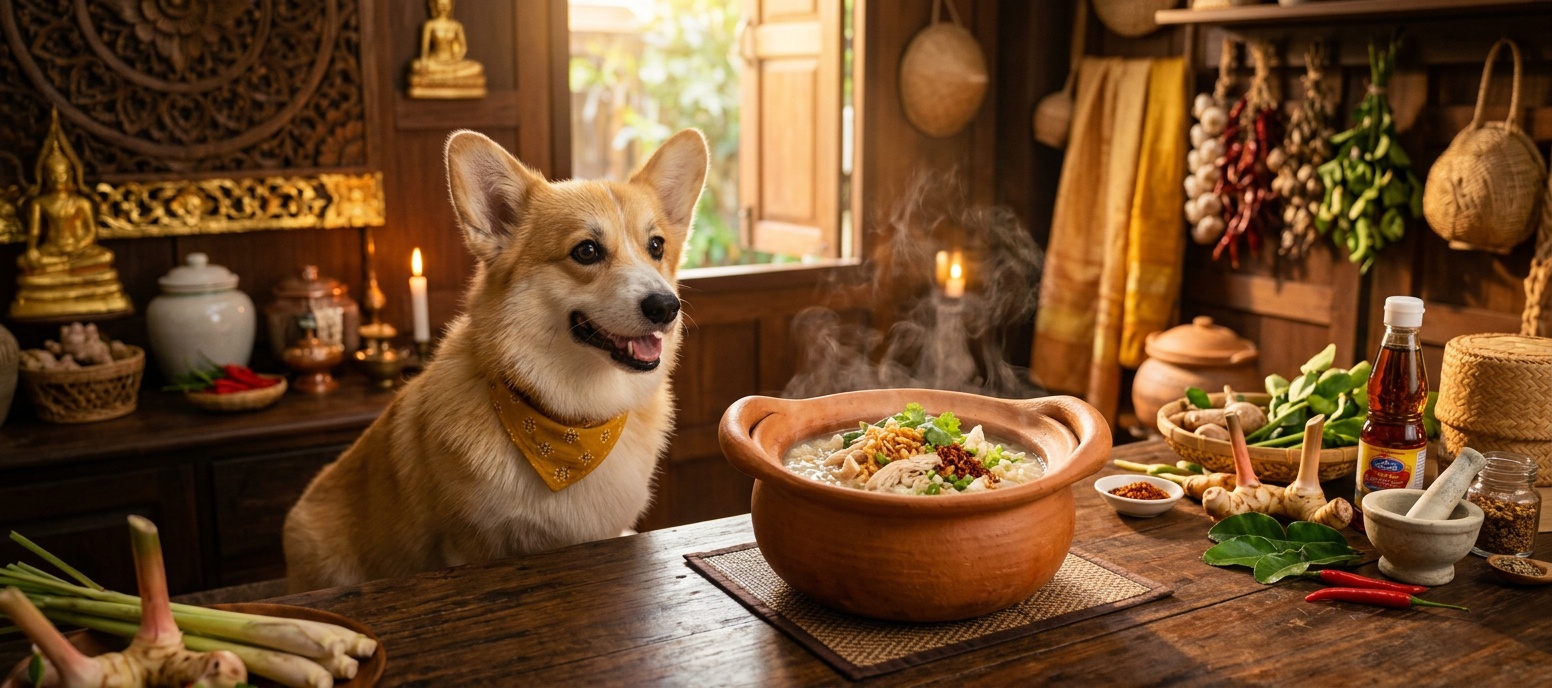
Golden Turmeric Chicken Rice Porridge — Thailand's most healing comfort dish, lovingly adapted for your dog. Jasmine rice slow-simmered with chicken thigh, kabocha pumpkin, fresh ginger and turmeric in a golden, fragrant broth. No fish sauce, no chilli, no spice. Just warmth, nourishment, and the ancient healing wisdom of Thai kitchen medicine.
⏱ Prep: 10 min
🔥 Cook: 30 min
🍽 Serves: 4
🔥 295 kcal/serving
Thai golden chicken rice porridge for dogs
📊 Nutrition Per serving
295
Calories (kcal)
28g
Protein
9g
Fat
26g
Carbs
3.2g
Fibre
🇹🇭

The Story Behind Khao Tom Gai

Khao Tom (ข้าวต้ม) — literally "boiled rice" — is eaten across Thailand as a morning meal, a remedy for illness, and a comfort food for any time of day. Street vendors across Bangkok and Chiang Mai serve it steaming hot before dawn, fragrant with ginger and coriander. It is said in Thai tradition that a bowl of khao tom can cure anything. We've kept that healing spirit — and swapped the fish sauce and chilli for dog-safe golden broth.

Why This Recipe Is So Good for Dogs

🌿
Turmeric
Curcumin reduces joint inflammation — shown in studies to reduce arthritis pain scores in dogs. Activated by the coconut oil in this recipe.
🫚
Fresh Ginger
A proven anti-nausea remedy and digestive tonic. Helps dogs who suffer from car sickness, bloating, or sensitive stomachs.
🎃
Kabocha Pumpkin
Rich in beta-carotene, fibre and potassium. Supports healthy digestion and bowel regularity — great for dogs with loose stools.
🍗
Chicken Thigh
More flavourful and juicy than breast meat. Rich in protein, zinc, and B vitamins. Stays tender in slow-cooked porridge without drying out.
🥥
Coconut Oil
Medium-chain triglycerides (MCTs) support brain function and energy. Also acts as a carrier for turmeric's fat-soluble curcumin.
🐟
Salmon Oil (finish)
Added cold after cooking to preserve omega-3 DHA and EPA — critical for brain, heart, coat and anti-inflammatory response.

🛒 Ingredients (makes 4 servings)

  • 350 gBoneless skinless chicken thigh, diced into 2cm pieces
  • 1 cupJasmine rice (uncooked)
  • 200 gKabocha pumpkin or butternut squash, peeled, seeds removed, diced
  • 80 gGreen beans, trimmed and halved
  • 1 tspFresh ginger, finely grated (no skin)
  • ½ tspFresh turmeric, finely grated — or ¼ tsp ground turmeric
  • 5 cupsUnsalted chicken broth (homemade or store-bought low sodium)
  • 1 tbspCoconut oil
  • HandfulFresh coriander (cilantro), roughly chopped — for garnish
  • + per bowl ¼ tsp eggshell calcium powder + ½–1 tsp salmon oil (add cold, after cooking)

⚠️ Important — Never Use These in Dog Recipes

  • Fish sauce / soy sauce — extremely high in sodium, toxic levels for dogs
  • Chilli or chilli paste — causes severe GI irritation and pain in dogs
  • Onion or shallots — toxic to dogs, destroys red blood cells
  • Garlic — toxic in all forms (fresh, powdered, cooked)
  • Lemongrass — can cause GI upset in dogs; skip it
  • Palm sugar / sweeteners — dogs don't need added sugar

👨‍🍳 How to Make It

1

Bloom the aromatics in coconut oil

Heat the coconut oil in a large heavy-bottomed pot over medium-low heat. Add the grated ginger and turmeric. Stir gently for 60 seconds until the oil turns golden and the kitchen smells fragrant. This step — "blooming" the spices — activates the curcumin in the turmeric and dramatically improves its bioavailability and anti-inflammatory potency. Don't let it brown or burn.

2

Lightly sear the chicken

Add the diced chicken thigh to the pot and cook for 3–4 minutes, stirring occasionally, until the outside is light golden. It doesn't need to be fully cooked yet — it will finish cooking during the long porridge simmer. Thigh meat is perfect here: it stays moist and juicy through extended cooking, unlike breast meat which can become dry and stringy.

3

Add the jasmine rice and broth

Add the jasmine rice to the pot and stir to coat it in the golden oil for 30 seconds. Pour in all 5 cups of unsalted chicken broth. Stir well to prevent sticking. Bring to a gentle boil over medium heat, then immediately reduce to the lowest heat setting on your stove.

4

Add pumpkin and slow-simmer to porridge

Add the diced kabocha pumpkin. Cook uncovered on the lowest heat, stirring every 5 minutes, for 25–30 minutes. You'll notice the rice grains gradually breaking down and the broth thickening into a creamy, silky porridge. This is the texture you want — thick enough to coat a spoon but still pourable. Add a splash of water or extra broth if it gets too thick. The pumpkin should be very soft and beginning to melt into the porridge.

5

Stir in the green beans

Add the trimmed and halved green beans in the final 5 minutes of cooking. Stir through and cook until just tender — they should still have a very slight bite. Overcooked green beans turn mushy and lose most of their vitamin C and folate content. Green beans add texture, fibre, and a gentle sweetness that most dogs love.

6

Cool down and finish cold

Remove from heat. Allow the porridge to cool to body temperature — test it on your wrist, it should feel warm but not hot. Spoon into your dog's bowl and scatter fresh coriander over the top (safe for dogs and adds antioxidants). Now stir in the eggshell calcium powder and salmon oil. These must always be added cold — cooking destroys the omega-3 fatty acids in salmon oil and can reduce calcium bioavailability. Serve immediately.

🧊 Batch Cooking & Storage

This recipe makes 4 generous servings. Store cooled portions in an airtight container in the fridge for up to 3 days, or freeze individual portions for up to 3 months. The porridge will thicken as it cools — stir in a splash of water when reheating. Always add the calcium powder and salmon oil fresh to each bowl, never to the stored batch.

⚖️ Is This Nutritionally Complete?

This recipe provides excellent macronutrient balance. The calcium powder and salmon oil are essential additions that make it nutritionally complete for regular feeding:

🍗

Protein (~28g per serving)

Chicken thigh provides complete amino acid profile. Adequate for adult maintenance and growth.

🥥

Fat (~9g per serving)

Coconut oil + salmon oil provides both MCTs and omega-3 DHA/EPA. Fat supports vitamin absorption.

🍚

Carbs (~26g per serving)

Jasmine rice + pumpkin provide slow-releasing energy and dietary fibre for healthy digestion.

🦴

Calcium (via powder)

Eggshell calcium balances the phosphorus in chicken meat. Essential for bones — don't skip this step.

🐕

Perfect For Dogs With Sensitive Stomachs or Joint Issues

The combination of ginger (anti-nausea), turmeric (anti-inflammatory), and easily digestible jasmine rice makes this recipe particularly beneficial for:

  • Dogs recovering from digestive upset or diarrhoea
  • Senior dogs with arthritis or joint inflammation
  • Dogs on antibiotics who need a gentle, easy-to-digest meal
  • Dogs prone to car sickness (ginger is a proven anti-nausea remedy)
  • Any dog who just needs a warm, comforting bowl on a cold day

📊 Nutrition Per Serving

295
Calories (kcal)
28g
Protein
9g
Fat
26g
Carbohydrates
3.2g
Fibre
68mg
Calcium (+ powder)

🐾 Serving Guide by Weight

Dog Weight Daily Amount
Under 5 kg½ serving
5–10 kg¾ serving
10–20 kg1 serving
20–35 kg1½ servings
35 kg+2 servings

🌿 The Golden Turmeric Rule

Always pair turmeric with a fat (coconut oil here) to maximise curcumin absorption. Without fat, very little curcumin enters the bloodstream. This recipe is designed to activate the turmeric properly — don't skip the coconut oil step.

Frequently Asked Questions

What is Khao Tom Gai?

Khao Tom Gai (ข้าวต้มไก่) means "boiled rice with chicken" in Thai. It is Thailand's most beloved comfort food — a silky, thick rice porridge cooked in broth with chicken and aromatics. Eaten for breakfast, when sick, or any time comfort is needed. This dog version replaces fish sauce and chilli with golden turmeric broth.

Is turmeric safe for dogs?

Yes — turmeric is safe for dogs and has well-documented anti-inflammatory benefits. Curcumin, its active compound, has shown results for reducing arthritis inflammation in dogs. Use ¼ tsp ground turmeric per 10kg body weight, and always pair with a fat source (like coconut oil) to activate it properly.

Can dogs eat ginger?

Yes — fresh ginger is safe for dogs in small amounts. It's a proven anti-nausea remedy and digestive support. Use no more than ¼ tsp fresh grated ginger for a medium dog per serving. It's particularly helpful for dogs prone to car sickness or stomach sensitivity.

Can dogs eat coriander (cilantro)?

Yes — fresh coriander is safe for dogs. It is a mild herb that provides vitamins A, C and K, as well as antioxidants. Most dogs enjoy the mild fragrance. Some dogs may dislike the smell and eat around it — that's perfectly fine, it's just a garnish here.

Why is salmon oil added after cooking, not during?

Heat destroys omega-3 fatty acids (DHA and EPA) in fish oil. Cooking salmon oil at high temperatures causes the beneficial fatty acids to oxidise and break down, producing compounds that can actually be harmful. Always add fish oil cold, directly to the serving bowl, after the food has cooled to eating temperature.