Picky Eaters • Homemade Dog Treats • Nutrition
Dogs love crunchy things just like we love potato chips. Here's how to turn any homemade dog food recipe into irresistible crispy bites — and exactly what nutrition survives the oven.
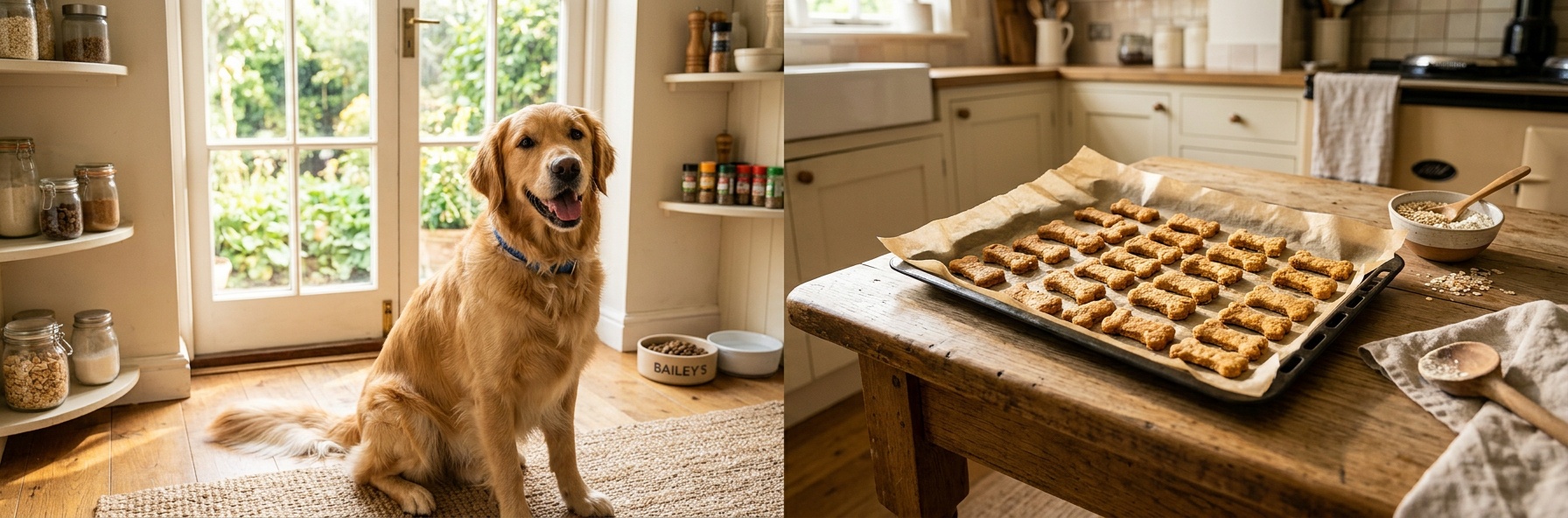
You've put real effort into your dog's food. Fresh meat, vegetables, superfoods, bone broth — the works. You place the bowl down. They sniff it. They walk away. You watch twenty minutes of work sit there going cold.
If this sounds familiar, you are not alone. Picky eating is one of the most common frustrations among owners who cook for their dogs. And the cruel irony is that it often gets worse the better the food is — because whole-food meals don't have the artificial flavour enhancers that make commercial kibble so addictive.
The solution came from noticing something obvious. When I give my dog a commercial crunchy treat from a bag, he goes absolutely berserk for it. The same ingredients in a soft bowl? Complete indifference. The difference had nothing to do with nutrition. It was entirely about texture.
Think about how you feel when you open a bag of potato chips. Before you even taste them, you want them. The smell, the crispiness, the satisfying sound of the crunch — these sensory cues are powerful appetite triggers. Dogs experience something very similar.
In the wild, a dog's ancestors ate prey that was crunchy — bones, cartilage, dried sinew. That crunch is deeply associated with fresh, high-quality food at a biological level. Kibble manufacturers have known this for decades. That distinctive crunch when your dog eats dry food? It's engineered. It's there specifically because dogs respond to it.
When you bake homemade food until it's crispy, you're using the same principle — but with actual whole-food ingredients instead of processed starch and artificial flavour. Same texture instinct. Completely different (and far superior) nutrition.
This works with almost any cooked homemade recipe — including our Ultimate 20-Ingredient Bowl. The process is simple.
Cook everything as you normally would — meat, organs, vegetables, grains and supplements all mixed together. The mixture should be moist and slightly sticky, like a thick mince. If it's very wet, drain off any excess liquid before baking.
Line one or two baking trays with baking paper. Spread the mixture as thinly and evenly as possible — aim for about 4–6 mm thick. The thinner it is, the crispier it gets. You can use the back of a spoon or a spatula to press it flat. If you want uniform pieces, score the surface into squares before baking.
Bake at 160°C (fan-forced) for 25–35 minutes. Check at the 20-minute mark. You want the edges to be firm and golden, and the surface to look dry rather than shiny. The lower temperature is intentional — it dries out the moisture without burning the outside before the inside is done.
This step is more important than it sounds. The treats continue crisping as they cool. If you break them off the tray while warm, they'll feel soft and bendy. Leave them to cool fully on the tray — usually 20–30 minutes — and they'll snap cleanly into pieces.
Snap or cut into treat-sized pieces. Then — and this is critical — drizzle your fish oil (sardine or salmon oil) directly onto the treats before serving. Never bake the fish oil. Omega-3s are destroyed by heat. Adding it cold over the finished treats means your dog still gets the full EPA and DHA benefit every time.
Make a large batch, let them cool fully, then break them into treat-sized pieces. Store in the fridge in an airtight container for up to 5 days, or freeze in a zip-lock bag for up to 3 months. Just drizzle fish oil fresh at each serving — don't add it to the stored batch.
This is the question most owners worry about — and the honest answer is: most of it. The oven does degrade some nutrients, but far less than you might fear. Here's a practical breakdown:
| Nutrient / Ingredient | Survives Baking? | Notes |
|---|---|---|
| Protein (meat, organs, eggs) | ✅ Yes — improved | Heat denatures protein, making amino acids more digestible and bioavailable |
| Minerals (calcium, iron, zinc, magnesium) | ✅ Yes — fully | Minerals are heat-stable and survive any cooking temperature without loss |
| Eggshell calcium | ✅ Yes — fully | Calcium carbonate is completely unaffected by baking |
| Fibre (pumpkin, oats, vegetables) | ✅ Yes — fully | Dietary fibre structure is preserved through cooking and baking |
| Turmeric (curcumin) | ✅ Yes — mostly | Curcumin is relatively heat-stable at normal baking temperatures |
| Taurine from hearts | ✅ Yes — mostly | Some water-soluble loss but the majority is retained |
| Beta-glucans from oats and shiitake | ✅ Yes — fully | These polysaccharides are heat-stable |
| Some B vitamins (B1, B12) | ⚡ Partial | B vitamins degrade with heat — some loss, but your diet variety covers the gap |
| Vitamin C | ⚡ Partial | Largely destroyed by heat — but dogs manufacture their own vitamin C, so this is not critical |
| Omega-3s (EPA & DHA) from sardines | ❌ No — add cold | Omega-3 fatty acids oxidise rapidly with heat. This is why you always add fish oil AFTER baking, drizzled cold over the finished treats |
The bottom line: protein becomes more digestible, minerals are untouched, fibre is intact, and most vitamins survive well. The only meaningful loss is omega-3s — which is exactly why the cold fish-oil drizzle after baking is non-negotiable, not optional.
Always add fish oil (sardine or salmon oil) after baking, cold, never before. Drizzle it directly onto the cooled treats just before serving. If you bake the oil in, you lose most of the EPA and DHA — the exact fatty acids your dog needs for brain, joint and coat health. Keep your fish oil in the fridge and use it within 4–6 weeks of opening.
Beyond the crunch instinct, baking concentrates the flavours in the food. As moisture evaporates, the aroma of the meat and vegetables becomes significantly more intense. To a dog's nose — which is between 10,000 and 100,000 times more sensitive than ours — that concentrated smell is extraordinary.
Think about it this way: a plain bowl of soup smells mild. Reduce that soup down to a thick glaze on a hot pan, and the smell fills the entire kitchen. Baking your dog's food does exactly the same thing — it amplifies every flavour signal your dog's nose picks up.
Picky dogs are almost always texture or aroma sensitive, not actually fussy about nutrition. Fix the texture and the aroma, and suddenly the healthiest meal you've ever made becomes the most exciting thing in their day.
When breaking the baked sheet into pieces, size them appropriately so your dog can eat them comfortably:
🐕 Tiny dogs (under 5 kg) — fingernail-sized pieces, about 1 cm squareServe the same total daily amount as you normally would — you're just changing the form, not the quantity. The baked version is a little denser than the fresh bowl (moisture has evaporated), so the same daily gram amount should satisfy your dog's needs.
If your dog has always been fussy, it is worth knowing that picky eating in dogs is often a learned behaviour rather than a genuine dislike of food. Dogs who have been hand-fed, fed human food at the table, or who have had owners switch foods repeatedly in response to refusal, learn that refusing a bowl eventually leads to something better.
The baking method bypasses this entirely because you are not offering an alternative — you are making the same nutritious food irresistible on its own terms. Most owners who try this find the problem disappears within a few days as their dog's appetite resets to whole-food eating.
If your dog still consistently refuses food despite the texture change, it is always worth a vet check to rule out dental pain, nausea, or an underlying health issue as the cause.
Get the full 20-ingredient recipe with gram weights for every dog size — small, medium, large and giant.
See the Full Recipe →