Beef & Veggie Dog Meatballs
Ground beef and chicken liver baked into hearty portion-controlled meatballs with oats, zucchini, carrot and spinach. Make 30 on Sunday. Feed all week. Freeze the rest.
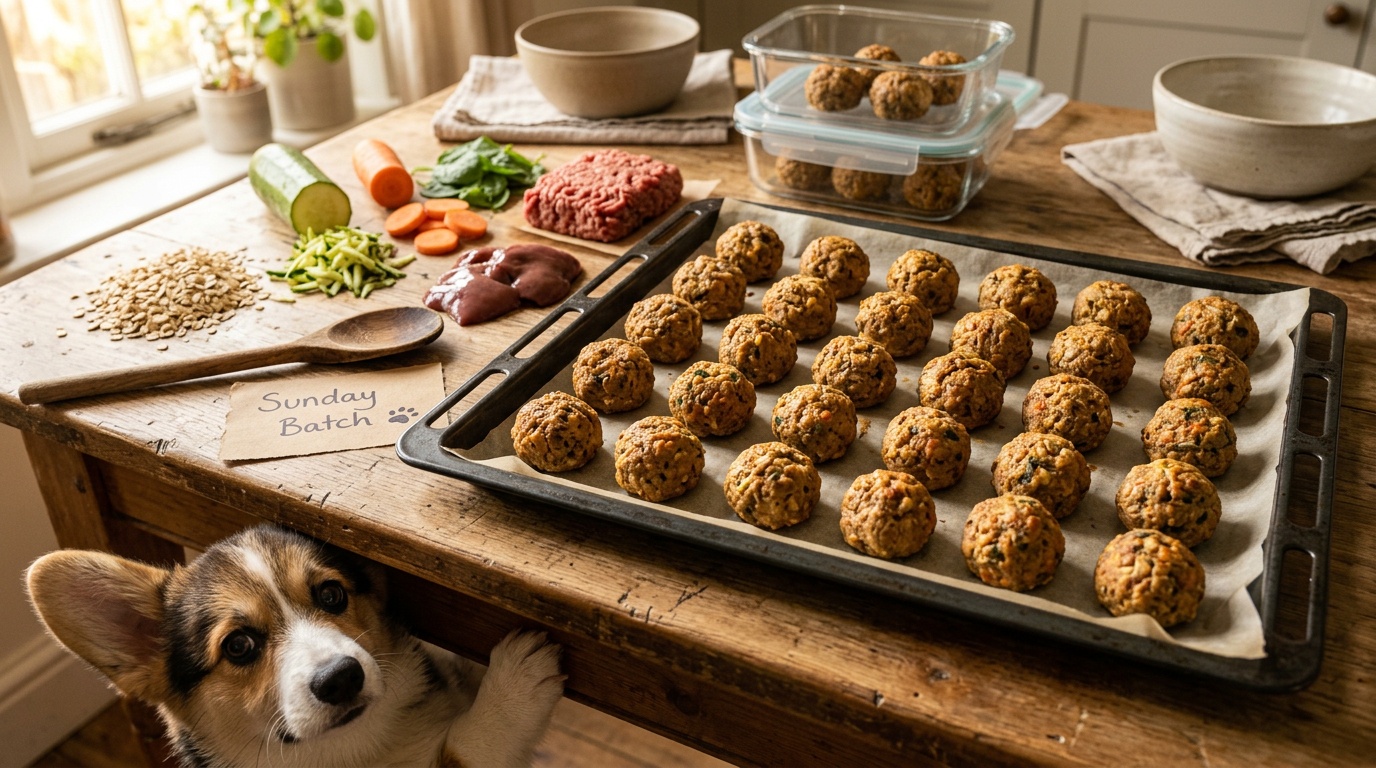
Ground beef and chicken liver baked into hearty portion-controlled meatballs with oats, zucchini, carrot and spinach. Make 30 on Sunday. Feed all week. Freeze the rest.
Grate the zucchini and wrap it in a clean cloth or tea towel. Squeeze firmly over the sink to remove as much water as possible. This is important — wet zucchini makes the meatballs fall apart. Grate the carrot and finely chop the spinach. Set aside.
Place the chicken livers in a small blender or food processor and blend until smooth. This makes them easier to mix evenly through the mince and removes any texture that might put dogs off. No need to cook them first.
In a large bowl, combine the ground beef, blended livers, eggs, rolled oats, squeezed zucchini, grated carrot and chopped spinach. Mix well with your hands until everything is evenly distributed. The mixture should hold together when pressed — if it feels too wet, add another tablespoon of oats.
Preheat your oven to 180°C. Line a baking tray with baking paper. Roll the mixture into balls — golf ball size (about 30g each) for large dogs, marble size (about 12g) for small breeds. Place them on the tray with a little space between each one. This batch makes about 30 golf ball-sized meatballs.
Bake at 180°C for 22 to 25 minutes until cooked through. The outside should be firm and slightly golden. If you're unsure, cut one in half — there should be no pink in the centre. Remove from the oven and allow to cool completely on the tray before handling.
This step happens every time you serve, not during cooking. Place the meatballs in your dog's bowl, then sprinkle ¼ tsp eggshell calcium powder over the top and drizzle 1 tsp salmon oil over everything. Both must be added cold after the meatballs have cooled — heat destroys the omega-3 in salmon oil and reduces the effectiveness of the calcium.
Ground beef, chicken liver and oats contain no meaningful DHA or EPA omega-3. Salmon oil is essential for this recipe to be nutritionally complete. But omega-3 fatty acids are heat-sensitive — cooking destroys them. Always add the oil cold at serving time, never into the mix before baking.
This recipe is built around NRC (National Research Council) nutritional guidelines for adult dogs. Here's how each gap is covered:
Ground beef provides all essential amino acids. Chicken liver adds taurine and B12, supporting heart and nerve function.
Meat is naturally high in phosphorus and low in calcium. ¼ tsp eggshell calcium powder per serving corrects this to the ideal 1.2:1 ratio.
Beef has no meaningful omega-3. 1 tsp salmon oil added cold supplies the DHA and EPA needed for brain, skin and joint health.
Chicken liver is one of the most nutrient-dense foods available. It covers iron, vitamin A, B12, folate and copper — all harder to source from muscle meat alone.
Labradors are one of the breeds that benefit most from a home-cooked diet like this one. They have notoriously enthusiastic appetites and a genetic predisposition to obesity — which means portion control matters enormously. Meatballs are ideal because each one is a fixed, measurable calorie count.