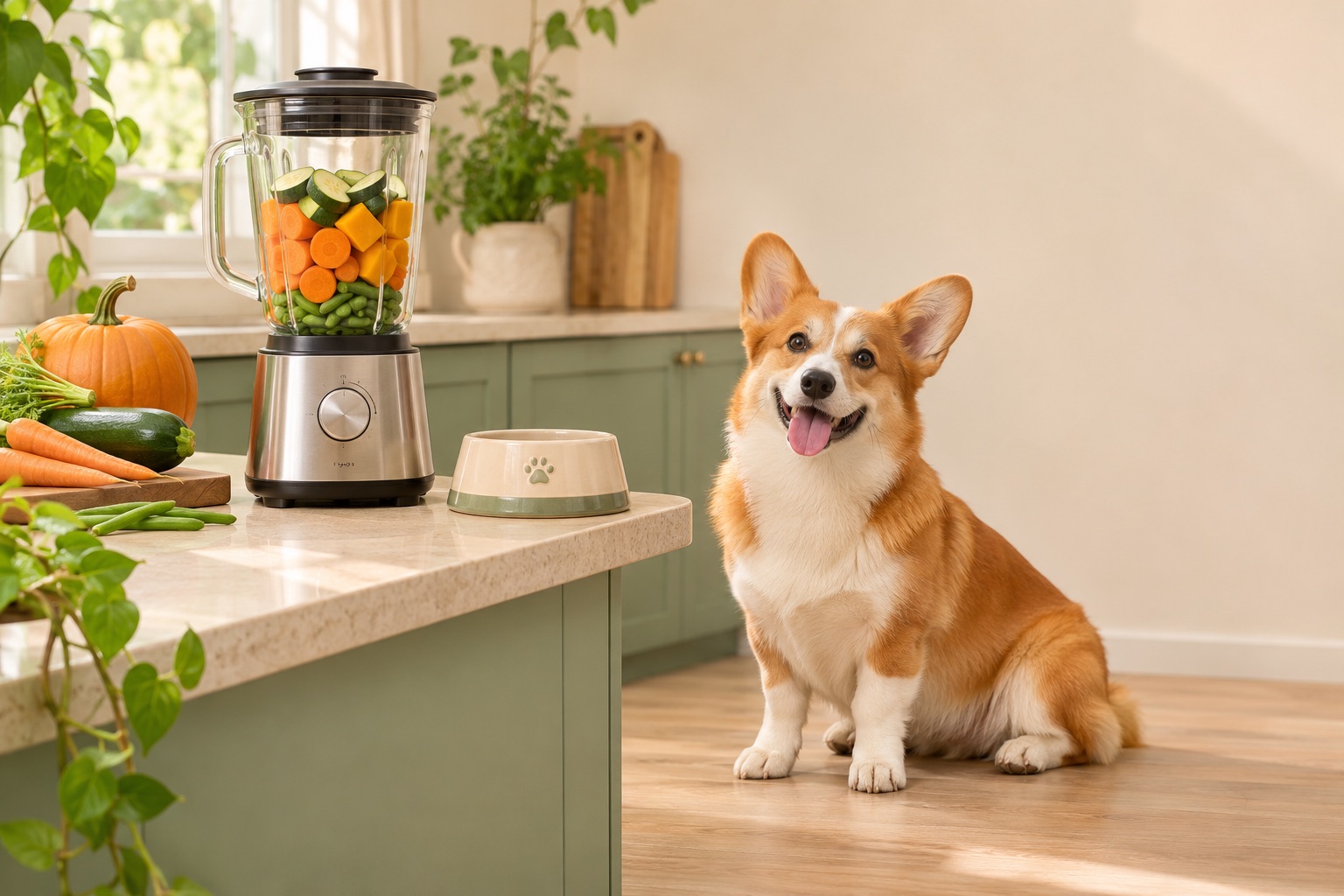
Blending is not the same as juicing
A blender keeps the vegetable’s liquid, pulp and cell-wall material together. A juicer separates liquid from much of the pulp, so it removes a considerable portion of the insoluble fibre. If you blend carrot, zucchini or green beans into your dog’s food and feed the full mixture, you have not strained that fibre away.
The fibre may be physically broken into smaller particles, but “smaller” does not mean “gone”. It can still affect stool bulk, fermentation and the speed at which food moves through the digestive tract.
| Method | What changes? | What happens to fibre? |
|---|---|---|
| Chopping | Creates smaller pieces | Retained |
| Blending/puréeing | Breaks food into much finer particles | Retained if all pulp is served |
| Juicing/straining | Separates liquid from pulp | Much of the insoluble fibre is removed |
| Cooking in water | Heat softens cells; some compounds enter the water | Retained, but nutrients in discarded water can be lost |
Can blending make some nutrients easier to access?
Plant cells have sturdy walls. Chopping, grinding and blending rupture some of those walls and reduce particle size. This can make compounds inside the cells more accessible during digestion. Carotenoids—the pigments found in carrots and pumpkin—are fat-soluble, and their release can improve when plant tissue is softened or finely disrupted.
That does not mean every blended nutrient is fully absorbed, or that a purée is automatically “better” than a chopped vegetable. Bioaccessibility depends on the vegetable, preparation, meal composition and the individual dog. A small amount of dietary fat may help carotenoid absorption, but it should be part of a properly formulated diet rather than added casually.
Where nutrient losses really happen
Air and time
Blending increases the food’s exposed surface area and mixes in air. Vitamin C and some plant compounds are sensitive to oxygen. The practical answer is not to fear the blender; it is to serve the purée promptly or refrigerate it in a closed container rather than leaving it uncovered for hours.
Heat and cooking water
Blending itself produces only brief frictional warming in normal home use. Cooking has a larger effect. Heat and water can reduce some water-soluble vitamins, particularly when vegetables are boiled and the liquid is discarded. Yet cooking can also soften fibre and improve the release of carotenoids. The result is not simply “raw good, cooked bad”.
Long storage
Light, oxygen, temperature and storage time all influence stability. A freshly blended mix is not nutritionally identical forever. Make modest amounts, keep them cold and use clean utensils.
A practical method for picky dogs
- Choose a dog-safe vegetable such as carrot, pumpkin, zucchini or green beans.
- Steam or cook it gently if a softer texture is needed.
- Blend with a little of its cooking liquid, without salt or stock.
- Mix a measured spoonful through the dog’s usual complete food.
- Refrigerate promptly or freeze small portions.
This is the same idea behind Basil’s hidden-vegetable chicken bites: change the texture, not the safety rules.
Vegetable safety matters more than blender speed
Blending does not make a toxic ingredient safe. Never blend onion, garlic, leeks, chives, grapes, raisins or xylitol-containing products into food for dogs. Avoid salty stock, sauces and heavily seasoned leftovers.
Vegetables are additions, not a shortcut to a balanced homemade diet. A colourful purée cannot correct missing calcium, essential fatty acids, trace minerals or vitamins in an otherwise incomplete recipe. Read our separate guide to what cooking does to nutrients in dog food.
For dogs with health conditions
Dogs with kidney disease, urinary stones, diabetes, pancreatitis, gastrointestinal disease or a prescription diet may need specific ingredient and fibre limits. Ask the treating veterinarian before adding vegetable blends.
Bottom line
Blending vegetables changes structure, not their identity. Fibre remains when the whole purée is served, some compounds may become easier to release, and oxygen-sensitive nutrients may gradually decline after preparation. Blend only dog-safe vegetables, store the result promptly, and treat it as a small part of the full diet—not as proof that a homemade recipe is complete.
Scientific and safety sources
- USDA Agricultural Research Service. Stability of vitamin C in frozen raw fruit and vegetable homogenates.
- Öztürk SA, Yaman M. Investigation of bioaccessibility of vitamin C in fruits and vegetables.
- USDA Agricultural Research Service. USDA Table of Nutrient Retention Factors.
- FDA. Proper Storage of Pet Food and Treats.
Veterinary note: This article provides general information and is not a formulation for a complete and balanced diet.