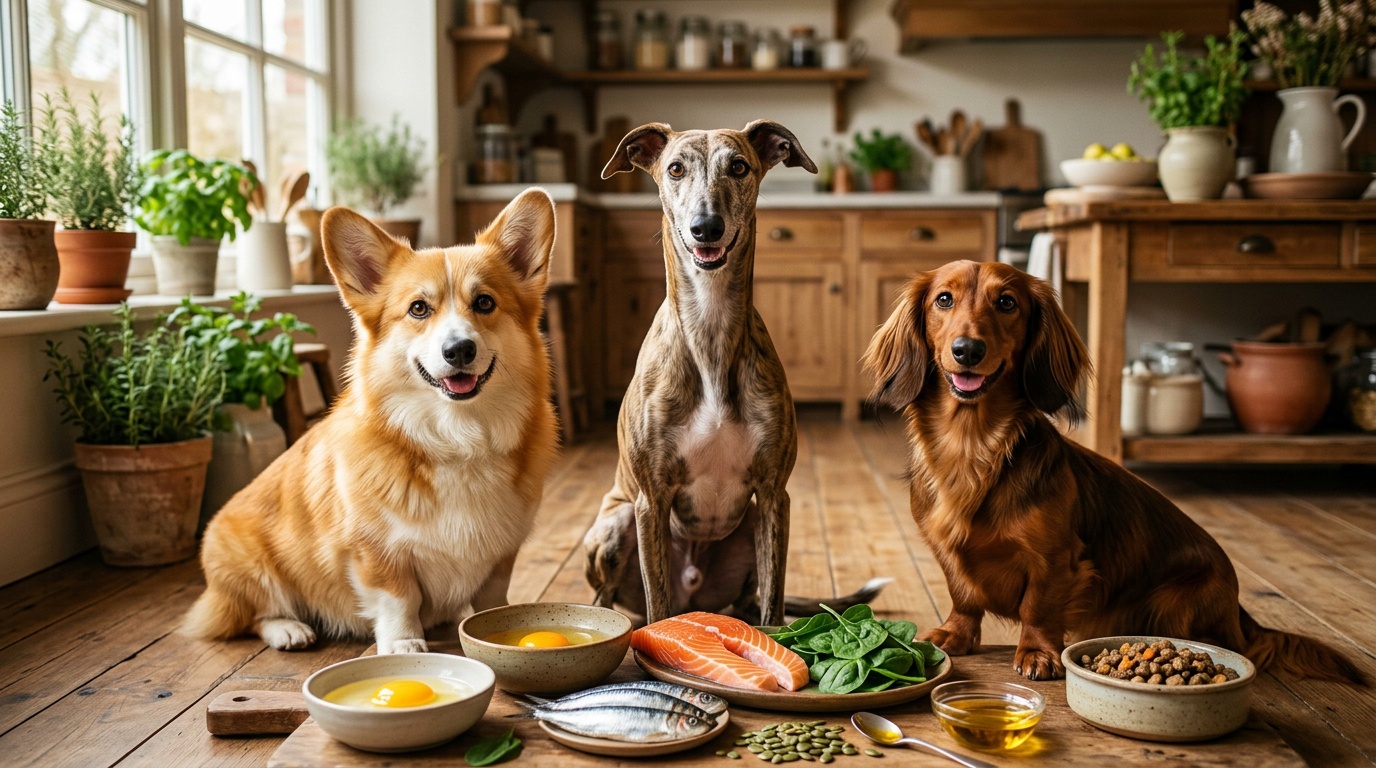
The coat is one of the most visible indicators of a dog's internal health. Skin and hair follicles are among the highest-turnover tissues in a dog's body — they consume a significant proportion of daily protein and micronutrients just to maintain themselves. When the diet is short on even one key nutrient, the body will deprioritise the skin and coat to protect more critical functions. The result shows up on the outside before anything else does.
If your dog's coat has become dull, rough to touch, excessively shedding, or accompanied by flaky or itchy skin, the cause is nutritional far more often than most owners realise. The good news: once you identify what is missing, the fix is straightforward and the results are visible within weeks.
The 5 Nutrients Behind a Healthy Coat
These are the nutrients most frequently found to be low in dogs with poor coat condition — and the ones a standard meat-and-rice or plain kibble diet is most likely to underprovide.
Nutrition vs Allergies: How to Tell the Difference
Not every coat problem is nutritional. Food or environmental allergies are the other major cause — and they look similar on the surface but respond to very different fixes. Here is how to distinguish between them:
📋 Nutritional Deficiency vs Allergy: Quick Reference
| Feature | Nutritional | Allergy |
|---|---|---|
| Pattern | Even, full-body dullness | Localised — paws, groin, ears, face |
| Itching | Mild or absent | Intense, focused, often recurring |
| Ear infections | Not typical | Common and recurring |
| Responds to diet fix | Yes — within 6–8 weeks | Only if the allergen is removed |
| Seasonal variation | No | Often yes (environmental) or year-round (food) |
If your dog has recurring ear infections, licks their paws obsessively, or the skin issues are concentrated in specific body areas, look into food allergies first — our recipe generator offers allergy-friendly protein options, and a proper elimination diet is the gold standard for diagnosis.
Breed-Specific Coat Notes
Some breeds have naturally higher nutritional demands for coat health, either because of coat density, skin structure, or known breed-specific tendencies.
The 3-Step Coat Fix Through Food
These three additions address the most common nutritional causes of poor coat condition in dogs eating homemade or basic commercial food. They are inexpensive, easy to source, and make a visible difference.
Add Salmon Oil or Sardines — Always Cold
Salmon oil or canned sardines (in water, no added salt) are the fastest-acting coat supplements available. Aim for 300–500mg EPA+DHA per 10kg of body weight daily. For salmon oil: ½ tsp for small dogs, 1 tsp for medium, 1½ tsp for large dogs. Critical: always stir in after food has cooled to room temperature — never cook it in. Heat destroys EPA and DHA completely. If using sardines instead of oil, 1–2 sardines per 10kg, 3–4 times per week is a practical guideline.
Rotate Beef Liver In 2–3× per Week
Beef liver is the richest natural source of biotin, zinc, copper, and vitamin B12 simultaneously. For a 10kg dog: approximately 30–40g of cooked liver, 2–3 times per week. Scale proportionally by weight. Cap liver at no more than 10% of total weekly food intake to avoid vitamin A accumulation over time. Chicken liver works equally well and has a slightly milder vitamin A concentration — a good option if your dog is smaller or liver-sensitive.
Add Eggs 3–4× per Week
Eggs are one of the most bioavailable protein sources in existence, and they deliver biotin, vitamin E, selenium, and all essential amino acids in a single ingredient. Feed them lightly scrambled or hard-boiled — never raw egg white, as raw avidin binds biotin and prevents absorption, which is the opposite of what you want. The egg yolk is where most of the nutrients sit. One egg per 10kg body weight, 3–4 times per week, is a reasonable starting guide.
✅ The Quickest Coat Test
Run your hand firmly along your dog's back from neck to tail. A well-nourished coat should feel smooth, slightly oily (not greasy), and spring back. If it feels dry, rough, or the hair breaks rather than bends — that is a strong signal of omega-3 and biotin deficiency. Compare again after 6 weeks of the changes above.
How Long Until You See Results?
weeks for noticeable shine improvement once omega-3 and zinc are consistently added.
Full coat regeneration (where old dull hair is replaced) takes 3–4 months.
The reason improvement takes weeks rather than days is biological: a hair follicle takes weeks to produce new growth, and the existing hair shaft cannot be chemically improved once it has grown — only new growth reflects the improved nutrition. You will typically notice the skin condition improving first (less flakiness, less itching), followed by new growth appearing shinier and softer, before the overall coat looks different.
If you see no improvement after 8 consistent weeks of dietary changes, it is worth visiting your vet. Hypothyroidism (underactive thyroid) is a common underlying condition that causes coat problems identical to nutritional deficiency — it is diagnosed with a simple blood test and managed with medication.
When to See the Vet
- No improvement after 8 weeks of consistent dietary changes
- Patches of hair loss (alopecia), especially symmetrical patches on the body
- Skin that is red, thickened, or has a greasy feel — possible seborrhoeic dermatitis
- Sudden coat changes in an adult dog with a previously good coat and unchanged diet
- Recurring ear infections alongside coat issues — almost always points to allergy rather than nutrition
- Small breed with crusty skin around the face — may indicate zinc-responsive dermatosis requiring medical-grade zinc supplementation
⚠️ A Note on Zinc Supplements
If your vet suspects zinc deficiency, they may recommend a zinc supplement. Do not self-dose with human zinc tablets — the forms and doses differ significantly. Zinc gluconate and zinc methionine are better tolerated in dogs than zinc sulphate. Excess zinc is toxic at high doses. Any supplementation beyond food sources should be guided by your vet.
Frequently Asked Questions
What causes a dull coat in dogs?
The most common nutritional causes are omega-3 fatty acid deficiency (EPA and DHA from fish), zinc deficiency, and insufficient biotin (vitamin B7). These nutrients are responsible for maintaining the skin barrier and producing healthy hair follicles. A plain meat-and-rice diet without fatty fish, liver, or eggs will typically be short on all three.
How long does it take for a dog's coat to improve after changing their diet?
Most owners see noticeable improvement in coat shine and texture within 6 to 8 weeks of adding omega-3 fatty acids and zinc-rich foods consistently. Full coat regeneration — where old dull hair is replaced by new healthy growth — takes closer to 3 to 4 months depending on the breed and severity of the deficiency.
Is a dull coat always a nutrition problem?
Not always. It can also result from food allergies, environmental allergies, thyroid disease (hypothyroidism), or skin infections. The key difference is that nutritional coat problems affect the whole body evenly and improve with dietary changes over weeks. Allergies typically cause localised itching, redness, or recurring ear infections. If the coat does not improve after 8 weeks of dietary correction, a vet visit is warranted to rule out other causes.
What is the best food to add for a shiny dog coat?
Sardines (canned in water, no added salt) are the single most effective coat food you can add — they deliver EPA and DHA omega-3s, zinc, and vitamin D in one ingredient. Beef liver adds biotin, zinc, and copper. Eggs contribute biotin and high-quality complete protein. Adding these three ingredients consistently addresses the most common nutritional causes of a dull coat.
Can I use coconut oil for my dog's coat?
Coconut oil is sometimes recommended for coat shine, but it is worth understanding what it does and does not do. It is a saturated fat — rich in medium-chain triglycerides — and has some antimicrobial properties when applied topically. However, it does not contain EPA or DHA omega-3s, which are the fats that actually drive coat quality from within. As a supplement added to food, coconut oil adds calories without the skin-specific benefits of fish oil. It is not a substitute for marine omega-3s.