What freezing actually does
At freezer temperatures, water forms ice and microbial growth largely stops. Chemical and enzymatic reactions slow dramatically, but they do not all stop. That is why frozen food remains safe for a long time when continuously frozen yet can gradually lose flavour, colour, texture and some sensitive nutrients.
The preparation before freezing may matter more than the freezer. Boiling vegetables in excess water and discarding the liquid can remove water-soluble nutrients. Long cooking can reduce heat-sensitive vitamins. Freezing cannot restore what was lost earlier, but it preserves much of what remains.
Which nutrients are most stable?
- Protein: remains nutritionally available, although texture can change.
- Fat: remains present, but oxygen exposure can cause oxidation and stale flavours over time—especially in fatty fish or meals containing delicate oils.
- Minerals: calcium, phosphorus, iron and other minerals are not destroyed by freezing.
- Fibre: remains in the food, though plant texture softens after freezing and thawing.
- Vitamins: stability varies. Fat-soluble vitamins are often relatively stable, while vitamin C and some B vitamins are more sensitive to preparation, oxygen and storage time.
A USDA study of frozen fruit and vegetable homogenates found that vitamin C stability varied by food: some samples remained stable for long periods, while others showed measurable decline. That is more accurate than saying freezing either “keeps everything” or “destroys everything”.
How to freeze homemade dog food safely
- Cook safely. Use clean equipment and cook meat thoroughly unless your veterinarian has prescribed another approach.
- Cool promptly. Divide food into shallow containers so it cools quickly. Do not leave cooked food at room temperature for more than two hours.
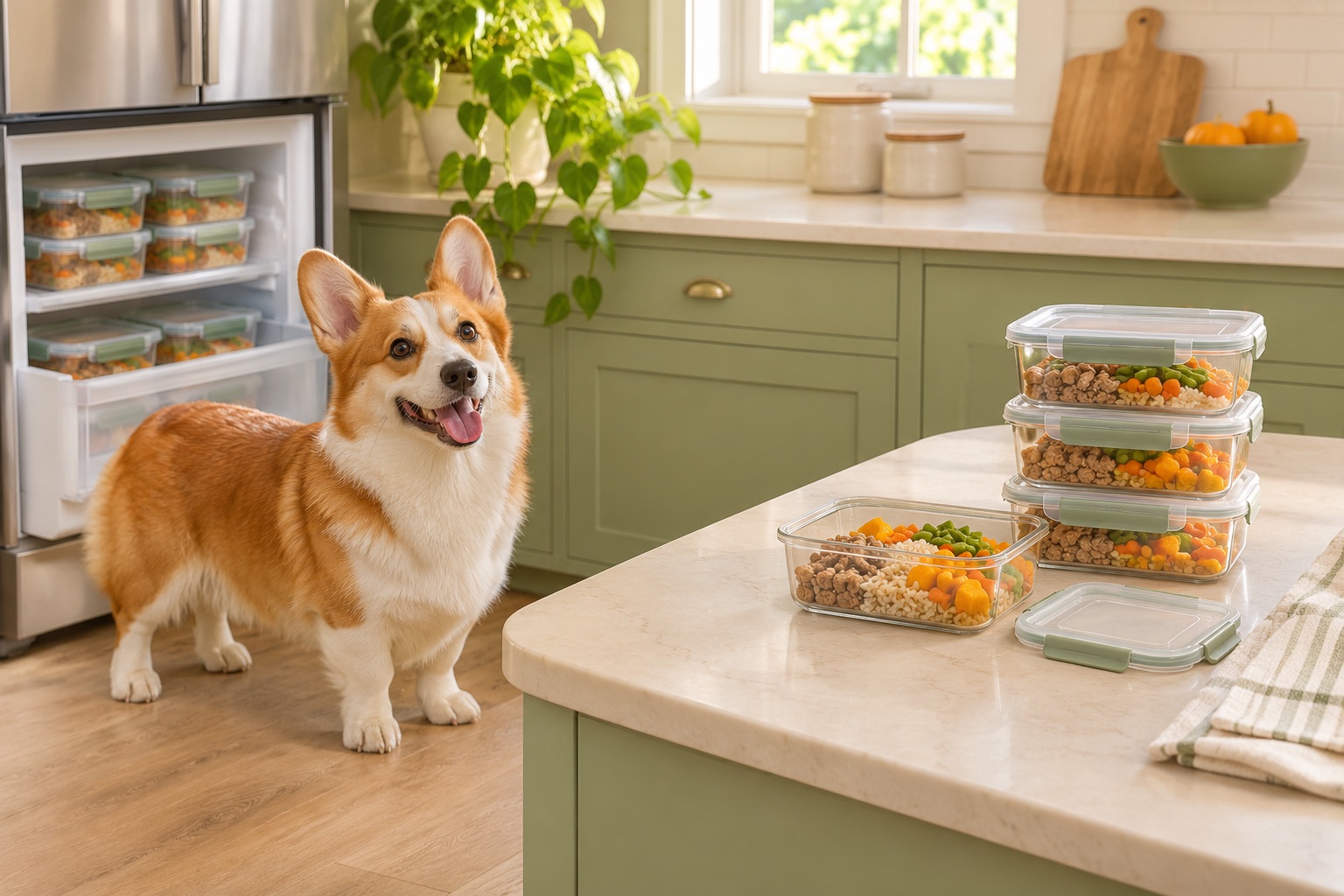
- Portion before freezing. Freeze one meal or one day’s food per airtight container. This avoids repeated thawing and handling.
- Label it. Add the recipe name and freezing date. If it is a veterinary formulation, also note any supplement that must be added after thawing.
- Remove excess air. Airtight packaging limits freezer burn and slows fat oxidation.
- Freeze promptly. Cooked leftovers should be refrigerated and used within three to four days or frozen for longer storage.
A sensible quality window
Continuously frozen food can remain safe for a long time, but quality declines. For routine home meal prep, rotating portions within roughly two to three months is a practical quality target. A freezer thermometer should read −18°C or below.
How to thaw it
The refrigerator is the easiest safe method: move tomorrow’s portion down the night before and keep it covered. USDA also recognises cold-water and microwave thawing as safe methods when the food is handled appropriately and used immediately. Countertop thawing is not safe because the outside can warm into the bacterial growth range while the centre remains frozen.
Microwaves do not have a special nutrient-destroying effect. Any heating method can affect heat-sensitive nutrients; time, temperature and added water matter. Microwave heating can be uneven, so stir well and check for hot spots before feeding.
Freezing does not sterilise raw food
Freezing does not reliably kill Salmonella, Listeria or every other pathogen. Raw frozen pet food can still expose dogs and people to harmful bacteria. Freezing is storage—not a substitute for safe handling or an effective cooking step.
What about supplements and oils?
Follow the exact instructions supplied with a veterinary-formulated recipe. Some supplements are designed to be mixed into a finished batch; others may be added after reheating or immediately before feeding. Delicate oils are vulnerable to oxidation, so keep them tightly closed, away from heat and light, and follow the manufacturer’s storage directions. Do not guess or silently omit a prescribed supplement.
Freezing cannot balance an incomplete recipe
A freezer protects food; it does not correct its nutrient profile. A recipe can look wholesome and still be deficient in calcium, iodine, zinc, copper, vitamin D or essential fatty acids. If homemade food supplies a substantial share of your dog’s diet, use a recipe formulated for that individual dog by a qualified veterinary nutrition professional.
For vegetable meal prep, also see whether blending vegetables destroys nutrients and our guide to what cooking changes.
Bottom line
Freezing is a practical, nutrient-friendly way to store properly prepared homemade dog food. Use airtight meal-sized portions, cool and freeze promptly, thaw in the refrigerator, and rotate batches for quality. The biggest nutritional question is still whether the recipe was correctly formulated before it entered the freezer.
Scientific and food-safety sources
- USDA Food Safety and Inspection Service. How to handle leftovers safely.
- USDA Food Safety and Inspection Service. Safe thawing methods.
- Phillips KM et al. Stability of vitamin C in frozen raw fruit and vegetable homogenates.
- FDA. Proper Storage of Pet Food and Treats.
- FDA. Why refrigeration and freezing do not kill pathogens in raw pet food.
Veterinary note: This article provides general storage guidance and does not make any homemade recipe complete and balanced.